
Can you install laminate countertops yourself? Yes, absolutely! With the right preparation and guidance, a DIYer can successfully install new laminate countertops. This detailed guide will walk you through the entire process, from choosing your materials to the final touches. We’ll cover everything you need to know to achieve a professional-looking finish without the high cost of professional installation. This kitchen countertop laminate installation guide is designed for anyone looking to update their kitchen with a durable and attractive new surface.
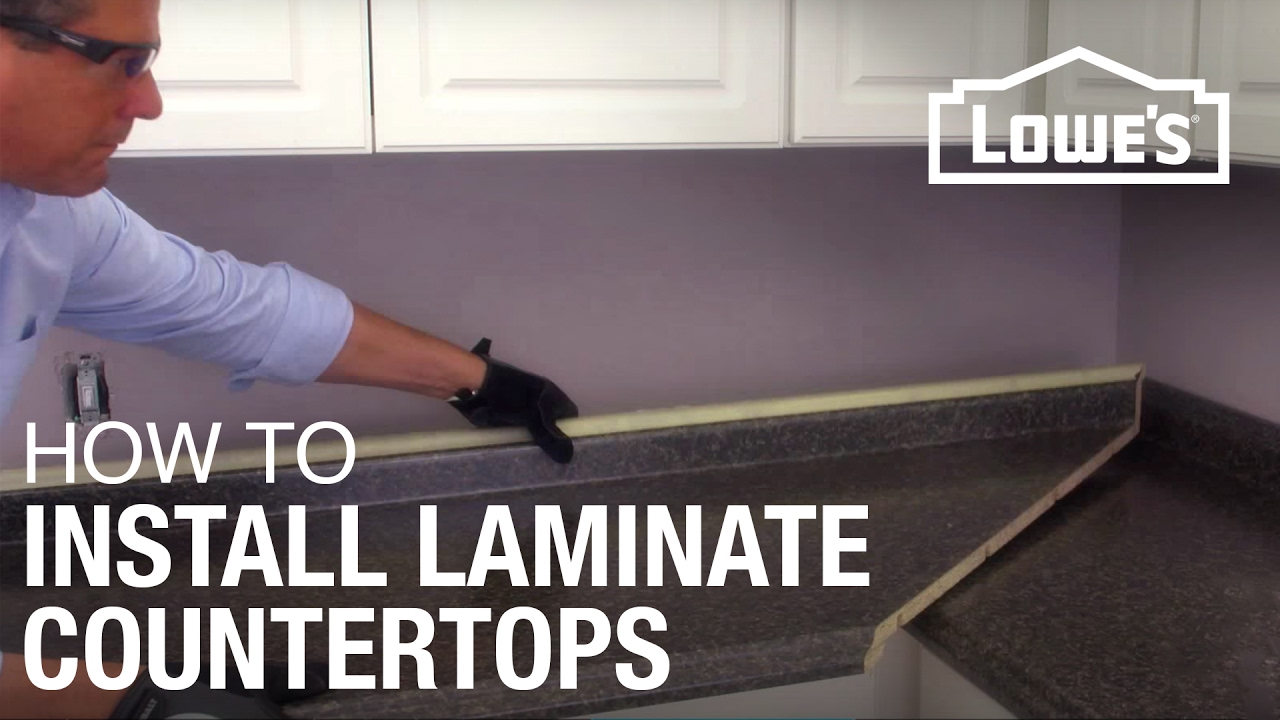
Image Source: i.ytimg.com
Why Choose Laminate for Your Kitchen Counters?
Laminate countertops have come a long way. Modern laminate offers a vast array of styles, colors, and patterns, mimicking the look of granite, marble, wood, and more. They are a popular choice for several reasons:
- Affordability: Compared to natural stone or solid surface countertops, laminate is significantly more budget-friendly.
- Durability: They are resistant to scratches, stains, and heat (within reason – always use trivets for hot items!).
- Low Maintenance: Easy to clean with soap and water.
- Versatility: The design options are nearly endless, allowing you to match any kitchen aesthetic.
- Ease of Installation: This is where the DIY aspect shines. Laminate is lighter and easier to work with than many other countertop materials.
Getting Started: Planning Your DIY Laminate Countertop Install
A successful DIY laminate countertop install begins with meticulous planning. Don’t skip this crucial stage!
1. Measure Accurately
This is the most important step. Measure your existing countertops precisely.
- Length: Measure each section of your countertop from wall to wall or cabinet to cabinet.
- Depth: Measure from the front edge to the back. Standard depth is usually 25 inches, but measure yours to be sure.
- Thickness: Measure the current thickness. Laminate sheets are typically 1 1/4 inches thick, but you need to know your existing profile.
- Cutouts: Mark the exact location and dimensions of sink cutouts and cooktop cutouts. Measure from the front edge and the side edges of your existing countertop.
Pro Tip: Always double-check your measurements. Measure twice, cut once is a mantra you’ll want to live by!
2. Choose Your Laminate and Substrate
You have two main options for installing laminate:
- Over Existing Countertops: If your current countertops are sturdy and flat (e.g., solid wood, particleboard, or existing laminate that’s in good condition), you can often apply new laminate directly over them. This is a faster and often easier method.
- New Substrate: If your existing countertops are damaged, warped, or you’re removing old cabinets, you’ll need to install a new substrate, usually 3/4-inch particleboard or plywood. Plywood is generally more resistant to moisture.
Laminate Sheet Types:
- Post-Formed: These sheets have a pre-formed edge and backsplash. They are easier to install for straight runs but can be tricky around corners.
- Field-Cut Laminate: These are flat sheets that you cut and shape yourself, allowing for more complex designs, custom edges, and precise fits. This is the type we’ll focus on for more complex installations.
Edge Profiles: Consider what kind of edge you want. Options include a standard square edge, a bullnose, or a decorative edge.
3. Gather Your Laminate Countertop Installation Tools and Materials
Having everything ready before you start will make the job much smoother.
Essential Tools:
- Measuring tape
- Pencils
- Safety glasses
- Work gloves
- Dust mask
- Jigsaw with fine-tooth blades (for curves and cutouts)
- Circular saw with a fine-tooth carbide blade (for straight cuts)
- Router with a laminate trimming bit or flush trim bit (for clean edge finishing)
- Contact cement (specific for laminate)
- Rollers (J-roller for pressing laminate onto substrate, heavy-duty laminate roller for flattening)
- Putty knife or scraper
- Utility knife with extra blades
- Drill with various bits
- Screwdriver set
- Clamps
- Sandpaper (various grits: 120, 180, 220)
- Caulking gun and silicone caulk (kitchen and bath grade, mildew resistant)
- Level
- Hammer
- Optional: File (for minor edge smoothing)
Materials:
- Laminate sheets (calculate square footage, adding 10-15% for waste)
- Contact cement (enough for two coats on both surfaces)
- Primer (if recommended by the laminate manufacturer for your substrate)
- Substrate material (if needed – particleboard or plywood)
- Screws (for securing substrate if needed)
- Contact cement thinner/cleaner (for cleanup)
- Wood filler or epoxy (for minor substrate repairs)
- Rag or clean cloths
Step-by-Step: The Kitchen Countertop Laminate Installation Guide
This section details the laminate countertop replacement steps if you are applying over existing counters or a new substrate.
Step 1: Preparing the Surface for Laminate Countertop
This is crucial for a smooth, long-lasting finish. Whether you’re working with old counters or new substrate, a clean, flat, and smooth surface is vital.
-
Remove Old Countertops (if applicable):
- Disconnect plumbing under the sink.
- Remove the sink and faucet.
- Unscrew the old countertop from the cabinets below. Look for screws along the underside of the cabinet face frame and sometimes through the backsplash.
- Carefully lift the old countertop away. If it’s stuck, check for hidden adhesive or caulk.
-
Prepare Existing Countertops:
- Clean thoroughly. Remove all grease, grime, and old caulk.
- Repair any damage. Fill small holes or cracks with wood filler or epoxy. Sand smooth once dry.
- Ensure the surface is perfectly flat. High spots will telegraph through the new laminate. Lightly sand any uneven areas.
- If your existing countertop is laminate and in good condition, you can often apply new laminate directly over it. Lightly scuff-sand the old laminate to give the new adhesive something to grip.
-
Install New Substrate (if needed):
- If you’re using a new substrate, lay your particleboard or plywood over the cabinets.
- Ensure it sits flush with the cabinet edges.
- Pre-drill pilot holes and secure the substrate to the cabinets with screws. Space screws about every 12-18 inches. Avoid overtightening, which can create dips.
- If you have a sink cutout, cut it out in the substrate now using a jigsaw.
-
Clean Again: After all preparation, give the entire surface a final wipe-down with a tack cloth or a damp cloth to remove any dust.
Step 2: Applying Laminate to Kitchen Counters – The Adhesive Stage
Contact cement is the magic ingredient for applying laminate to kitchen counters. It creates a strong, permanent bond.
-
Dry Fit: Before applying any adhesive, lay your laminate sheet over the substrate. Trim it so it overhangs the edges by about 1.5 to 2 inches on all sides. This overhang will be trimmed later for a perfect fit.
-
Apply Contact Cement:
- Work in a well-ventilated area. Wear gloves and a mask.
- Apply a thin, even coat of contact cement to the back of the laminate sheet using a brush or roller. Make sure to cover the entire surface, including the edges.
- Apply a second coat to the laminate sheet.
- Now, apply a thin, even coat of contact cement to the substrate surface. Ensure you cover the entire area where the laminate will be placed.
- Allow both surfaces to dry until they are tacky to the touch but don’t transfer to your finger. This usually takes 15-30 minutes, but check the product instructions. Do not rush this drying process!
-
Positioning the Laminate: This is a critical step that requires precision.
- Start at one end, lifting a small section of the laminate and carefully aligning it with the edge of the substrate.
- Once the laminate touches the substrate, the bond is immediate and permanent. There’s no repositioning.
- To help with precise placement, you can use thin strips of cardboard or thin wood scraps placed across the substrate. Lay the laminate onto these strips. Once it’s in the correct position, carefully pull out the strips one by one, allowing the laminate to adhere gradually from one edge to the other. This gives you a little wiggle room before the bond sets.
-
Rolling and Bonding:
- Once the laminate is positioned, use a J-roller or a laminate roller to press the laminate firmly onto the substrate. Start from the center and work your way outwards, pressing out any air bubbles.
- Apply firm, even pressure across the entire surface. Work from the center to the edges.
- Repeat this process for all sections of your countertop.
Step 3: Cutting and Trimming Laminate Countertop Edges
This is where you shape the laminate to fit your cabinets perfectly.
-
The Overhang: You should have a consistent overhang of 1.5 to 2 inches on all sides and the front edge.
-
Initial Trimming:
- Use a sharp utility knife and a metal straight edge or a router with a straight edge guide to score the laminate along the edge of the substrate. Make multiple passes to cut through.
- For the front edge, you’ll typically want to create a bullnose or a decorative edge. This often involves carefully breaking the laminate overhang down with your hands or a hammer and chisel after scoring. For a clean bullnose, you’ll likely need a router.
-
Trimming with a Router: This is the best method for a professional finish, especially for edges.
- Install a laminate trimming bit or flush trim bit into your router. Ensure the bearing on the bit will ride along the edge of your substrate.
- Set the router base so the cutting edge of the bit is just slightly above the laminate.
- Start routing from the back of the countertop, working towards the front. Keep the router base firmly against the substrate edge.
- Move the router smoothly and steadily around the entire perimeter. The bit will trim the laminate flush with the edge of the substrate.
- For the front edge, if you’re aiming for a specific profile (like a bullnose), use a router bit designed for that purpose.
-
Handling Corners:
- For inside corners (like around a sink cutout), use a jigsaw with a fine-tooth blade to cut out the laminate.
- For outside corners, you can often achieve a clean look by routing them or by carefully scoring and snapping the laminate with a utility knife.
-
Trimming the Backsplash: If your laminate has a built-in backsplash, trim it to the desired height using a circular saw with a fine-tooth blade and a straight edge guide.
Step 4: Cutting Out the Sink and Faucet Holes
This requires precision.
- Marking: Use your old countertop or the template provided with your sink/faucet to carefully mark the cutout locations on the laminated surface. Double-check all measurements.
- Drilling Pilot Holes: Drill a small pilot hole inside the marked cutout area. This is where you’ll insert the jigsaw blade.
- Cutting: Insert a fine-tooth jigsaw blade into the pilot hole. Cut slowly and steadily along your marked lines. Keep the jigsaw base flat on the laminate.
- Trimming Edges: Once cut, the edges of the cutout might be a bit rough. You can use a router with a small roundover bit or a file to smooth these edges.
Step 5: Sealing Laminate Countertop Seams and Edges
Proper sealing is vital for preventing moisture damage and ensuring longevity.
-
Seam Sealing: If you have multiple laminate pieces that meet, these seams need to be sealed.
- Ensure the edges of the laminate pieces are perfectly cut and butt tightly together.
- Apply a small bead of clear silicone caulk or a specialized laminate seam sealer along the seam.
- Use a caulk tool or a damp finger to smooth the caulk, pressing it into the seam. Wipe away any excess immediately with a clean cloth.
-
Edge Sealing:
- For any exposed substrate edges (especially around sink cutouts or where the laminate doesn’t meet a backsplash), it’s good practice to seal them.
- Apply a thin bead of silicone caulk around the cut edges and smooth it out.
-
Splashguard: If your countertop doesn’t have a built-in backsplash, you can install a separate one. Alternatively, you can caulk the joint between the back of the countertop and the wall to create a moisture barrier.
Step 6: Final Touches and Reinstallation
- Clean Up: Remove all dust and debris from the newly installed countertops.
- Reinstall Sink and Faucet:
- Place the sink into its cutout.
- Apply a bead of silicone caulk around the rim of the sink for sealing.
- Install the faucet and connect the plumbing.
- Secure the sink according to the manufacturer’s instructions.
- Final Inspection: Check all edges, seams, and cutouts for a clean finish.
Tips for Successful Laminate Countertop Installation
- Work in Good Lighting: You need to see what you’re doing clearly.
- Sharp Blades are Key: Dull blades will chip and tear the laminate, leading to a poor finish. Change router bits and jigsaw blades as needed.
- Patience is a Virtue: Rushing any step, especially applying contact cement or cutting, can lead to mistakes.
- Ventilation: Contact cement fumes are strong. Ensure good airflow.
- Read the Manufacturer’s Instructions: Always defer to the specific instructions provided by the laminate and contact cement manufacturers, as there can be slight variations.
- Practice Cuts: If you’re unsure about how to cut laminate for countertops, practice on scrap pieces first.
Common Mistakes to Avoid
- Skipping Surface Preparation: A rough or dirty surface leads to adhesion problems.
- Applying Contact Cement Too Soon: Letting it dry to the correct tackiness is crucial for a strong bond.
- Misalignment: Once contact cement touches, it sticks. Careful alignment is paramount.
- Using Dull Blades: Results in chipping and an unprofessional look.
- Not Allowing Enough Overhang: Makes trimming difficult.
- Forgetting to Seal Seams: Leads to water damage and delamination.
Frequently Asked Questions (FAQ)
Q1: Can I install laminate countertops over old countertops?
Yes, you can install laminate countertops over existing countertops, provided the old ones are structurally sound, flat, and clean. You may need to lightly sand the old surface to ensure good adhesion.
Q2: What is the best adhesive for laminate countertops?
Contact cement specifically designed for laminate is the best adhesive. It creates a strong, instant bond when both surfaces are tacky.
Q3: How do you cut laminate for countertops accurately?
For straight cuts, use a circular saw with a fine-tooth carbide blade and a straight edge guide. For curves and sink cutouts, use a jigsaw with a fine-tooth blade. A router with a laminate trimming bit is essential for clean edge finishing.
Q4: How do you make sure the laminate adheres properly?
Ensure both the laminate and the substrate are clean and dry. Apply contact cement evenly to both surfaces and allow it to dry to a tacky state before joining. Use a laminate roller to press the laminate down firmly, working from the center outwards to eliminate air bubbles.
Q5: How do you trim laminate countertop edges for a clean finish?
The best way to trim laminate countertop edges is by using a router equipped with a laminate trimming bit or flush trim bit. The bearing on the bit rides along the edge of the substrate, guiding the router to trim the laminate flush.
Q6: How do you seal laminate countertop seams?
Ensure seams are tightly butted. Apply a thin bead of clear silicone caulk or laminate seam sealer into the seam and smooth it with a caulk tool or a damp finger. Wipe away excess immediately.
Q7: What tools are essential for installing laminate countertops?
Essential laminate countertop installation tools include a measuring tape, pencil, safety glasses, gloves, dust mask, jigsaw, circular saw, router, contact cement, rollers (J-roller and laminate roller), utility knife, and sandpaper.
Q8: How do I prepare the surface for laminate countertop installation?
Preparing the surface for laminate countertop involves removing old countertops if necessary, cleaning the existing surface thoroughly, repairing any damage, and ensuring the surface is flat and smooth. If using a new substrate, ensure it’s securely fastened to the cabinets.
Q9: Can I apply laminate to kitchen counters myself?
Yes, with patience, careful planning, and the right tools, you can apply laminate to kitchen counters yourself. This guide provides the steps to help you achieve a professional result.
Q10: What’s the best way to avoid bubbles when applying laminate?
Work slowly and deliberately when joining the laminate to the substrate. Use a laminate roller to press firmly from the center outwards, pushing any trapped air towards the edges. If you do get a small bubble, try to gently lift the laminate edge and re-adhere it, or use a pin to let air out and then press it down.
By following this comprehensive kitchen countertop laminate installation guide, you can confidently tackle this project and enjoy your beautifully updated kitchen. Remember to prioritize preparation, use the right tools, and work with patience for the best results!