
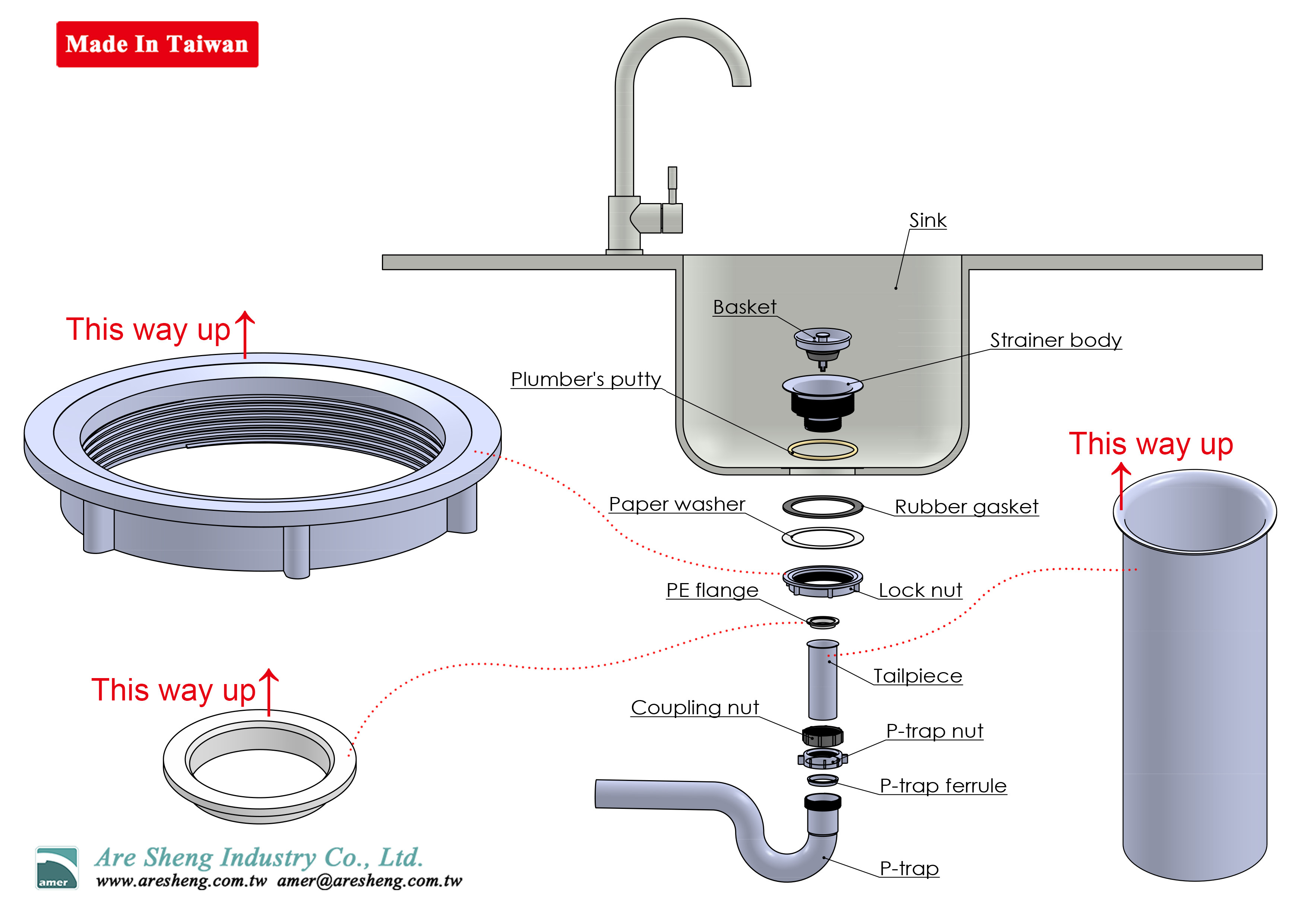
Image Source: www.aresheng.com.tw
Step-by-Step: How To Install A New Kitchen Sink Drain
Can you install a kitchen sink drain yourself? Yes, you can! Installing a new kitchen sink drain is a manageable DIY project that can save you money and give you a sense of accomplishment. This guide will walk you through each step, from gathering your tools to ensuring a watertight seal.
Preparing for Your Drain Installation
Before you begin, it’s important to have all your tools and materials ready. This will make the installation process much smoother. You’ll need to gather a few key items to successfully complete the job.
Essential Tools and Materials
Here’s a list of what you’ll likely need:
- New Kitchen Sink Drain Assembly: This is the core of your project. It typically includes the sink strainer, the threaded part that fits into the sink opening, and the plumbing tailpiece that extends from it.
- Plumber’s Putty: This pliable, non-hardening putty creates a watertight seal between the sink strainer and the underside of the sink.
- Sealant (Silicone Caulk): While plumber’s putty is the primary sealant, a bead of silicone caulk around the top edge of the strainer can provide extra protection against leaks.
- Pipe Wrench or Basin Wrench: These tools are crucial for tightening and loosening plumbing connections. A basin wrench is particularly useful for reaching tight spaces under the sink.
- Screwdriver: You might need a Phillips or flathead screwdriver, depending on the type of mounting hardware your drain assembly uses.
- Bucket or Towels: To catch any residual water in the pipes.
- Safety Glasses: Protect your eyes from debris or splashing water.
- Work Gloves: To keep your hands clean and protected.
- Rag or Sponge: For cleaning up any excess putty or water.
- Replacement P-Trap Components (if needed): If your old P-trap installation is worn or damaged, you might need to replace some parts.
Understanding Your New Drain Components
Fathoming the function of each part ensures you assemble them correctly. Your new kitchen sink drain assembly typically consists of:
- Sink Strainer: This is the visible metal basket or disc that fits into your sink’s drain hole. It prevents large food particles from entering the drain. It has a rubber gasket and a metal ring to create a seal.
- Drain Flange: This is the underside of the sink strainer assembly, the part that will press against the bottom of your sink.
- Tailpiece: This is a short pipe that screws onto the bottom of the drain flange. It’s where the drain pipe connection to your P-trap will be made.
- Locknut and Washer: These secure the drain flange to the sink.
Removing the Old Sink Drain
The first step to installing a new drain is to remove the old one. This process usually involves disconnecting the P-trap and then unscrewing the old drain assembly from the sink.
Disconnecting the P-Trap
- Place a Bucket: Position a bucket or some old towels directly underneath the P-trap. This U-shaped pipe is designed to hold water, which prevents sewer gases from entering your home, but it also means water will drain out when you disconnect it.
- Loosen the Slip Nuts: The P-trap is usually connected to the sink tailpiece and the wall drainpipe with large plastic or metal nuts called slip nuts. Loosen these by hand or with a pipe wrench. Turn them counterclockwise. If they are very tight, you may need to use the wrench.
- Remove the P-Trap: Once the slip nuts are loose, carefully maneuver the P-trap away from the tailpiece and the wall pipe. Let any trapped water drain into the bucket.
Detaching the Old Drain Assembly
- Locate the Locknut: Underneath the sink, where the drain connects to the sink basin, you’ll find a large metal nut (the locknut) holding the drain flange in place.
- Loosen the Locknut: Use your pipe wrench or basin wrench to loosen this locknut by turning it counterclockwise. It can sometimes be difficult to reach, which is where a basin wrench is invaluable.
- Remove the Old Strainer: Once the locknut is off, the old drain assembly should loosen from the sink. From above, you might need to gently pry the old sink strainer out of the sink drain opening. It might be stuck in place with old plumber’s putty or sealant. You may need to scrape away any old putty or sealant with a putty knife.
Installing the New Sink Drain
With the old drain removed, you’re ready to install the new kitchen sink drain assembly. This part requires careful sealing to prevent future leaks.
Preparing the Sink Opening
- Clean the Sink Surface: Thoroughly clean the sink drain opening and the area around it. Remove any old plumber’s putty, sealant, or debris. A clean surface is essential for a good seal.
- Apply Plumber’s Putty: Take a generous amount of plumber’s putty and roll it into a rope about 1/2 inch thick. Place this rope of putty around the underside of the drain flange (the part that sits against the sink). Ensure it forms a continuous ring.
Assembling the Drain Flange and Sink
- Insert the Drain Flange: Carefully insert the sink strainer with the plumber’s putty into the drain opening from the top of the sink. Press down firmly to seat it.
- Add the Washer and Locknut: From underneath the sink, slide the rubber gasket (usually the thickest one), followed by the metal washer, onto the threaded plumbing tailpiece of the strainer. Then, thread the locknut onto the tailpiece.
- Tighten the Locknut: Hand-tighten the locknut as much as you can. Then, use your basin wrench or pipe wrench to tighten it another half to full turn. Be careful not to overtighten, as this can damage the sink or the drain assembly. The goal is to compress the plumber’s putty and create a watertight seal.
- Clean Excess Putty: From the top of the sink, wipe away any excess plumber’s putty that has squeezed out around the sink strainer.
Connecting the Tailpiece and P-Trap
Now you’ll connect the newly installed drain to your existing plumbing. This is where the drain pipe connection happens.
- Attach the Tailpiece: If your new kitchen sink drain assembly didn’t come with a tailpiece attached, screw the provided tailpiece onto the bottom of the drain flange. Hand-tighten it and then give it a quarter turn with your wrench.
- Position the P-Trap: Reassemble your P-trap if you took it apart completely. Make sure the rubber washers are properly seated inside the slip nuts.
- Connect the P-Trap: Align the P-trap with the sink tailpiece and the wall drainpipe. Connect the tailpiece to the P-trap by hand-tightening the slip nut. Then, connect the P-trap to the wall drainpipe and tighten that slip nut as well.
- Ensure Proper Alignment: Make sure the P-trap is correctly aligned. It should have a slight downward slope from the sink tailpiece to the wall pipe, with the U-bend creating the water seal.
Testing for Leaks
This is a critical step to ensure your installation is successful. A properly sealed drain will prevent water damage and unpleasant odors.
Performing the Water Test
- Fill the Sink: Plug the sink drain with the stopper and fill the sink basin with a few inches of water.
- Inspect for Leaks: Carefully check all the connections you made underneath the sink. Look for any drips or moisture around the drain flange, the locknut, the tailpiece, and the P-trap installation points.
- Drain the Sink: Once you’ve inspected everything, remove the stopper and let the water drain. Continue to monitor the connections as the water flows through the pipes. Pay close attention to the drain pipe connection points.
Tightening and Sealing
If you find any leaks:
- Slightly Tighten Connections: If you see a drip, try slightly tightening the slip nut or locknut.
- Reapply Putty or Sealant: If tightening doesn’t resolve the issue, you may need to disassemble the leaky connection, clean off the old putty or sealant, reapply a fresh bead of plumber’s putty or silicone sealant to the appropriate surfaces, and reassemble. Make sure the rubber gaskets on the P-trap are correctly seated.
Important Considerations and Tips
Here are some additional points to keep in mind for a successful drain installation.
Working with Different Sink Materials
The installation process can vary slightly depending on your sink material:
- Stainless Steel: These sinks are quite durable, but be careful not to overtighten the locknut, as it can deform the sink.
- Porcelain or Ceramic: These sinks can be more prone to cracking. Use moderate force when tightening the locknut. A rubber gasket between the metal locknut and the ceramic can help prevent damage.
- Composite or Granite: These materials are robust, but it’s still wise to avoid excessive force during tightening.
Troubleshooting Common Issues
- Persistent Leaks: If you have persistent leaks, double-check that all washers are in place and oriented correctly. Ensure the plumber’s putty or sealant has formed a complete, unbroken seal.
- Difficulty Reaching: For tight spaces, a basin wrench is indispensable. It’s designed specifically for reaching nuts in awkward locations under sinks.
- Stubborn Old Drains: If the old drain assembly is corroded and difficult to remove, penetrating oil might help loosen it. Be patient and work slowly.
When to Call a Professional
While most sink drain installations are DIY-friendly, consider calling a plumber if:
- You encounter significant corrosion or damage to your existing plumbing.
- You are uncomfortable working with plumbing or are unsure about any step.
- You have multiple leaks after attempting to fix them.
Frequently Asked Questions (FAQ)
-
Q: What is plumber’s putty used for?
A: Plumber’s putty is used to create a watertight seal between plumbing fixtures, like the sink strainer, and the surface they are installed on (the sink). It’s pliable and doesn’t harden, allowing for slight adjustments and a reliable seal. -
Q: How tight should I make the drain assembly nuts?
A: Hand-tighten the nuts first, then use a wrench to tighten them about a quarter to a half turn more. The goal is to compress the putty or gasket for a seal, not to strip the threads or damage the sink. -
Q: Do I need plumber’s putty or silicone sealant?
A: Plumber’s putty is generally used for the drain flange to sink seal. Silicone sealant can be used as an extra measure around the top edge of the strainer, especially on sinks where putty might not adhere perfectly. -
Q: What is a P-trap, and why is it important?
A: A P-trap is the U-shaped pipe under your sink. It holds a small amount of water to block sewer gases from entering your home through the drain. Proper P-trap installation is crucial for preventing odors and maintaining hygiene. -
Q: How do I connect the sink drain to the pipe in the wall?
A: The drain pipe connection to the wall is usually made via the P-trap. The sink’s plumbing tailpiece connects to one end of the P-trap, and the other end of the P-trap connects to the waste pipe extending from the wall. Slip nuts and washers are used to secure these connections.
By following these detailed steps, you can successfully install a new kitchen sink drain. Remember to work patiently, double-check your connections, and test thoroughly for leaks.