
Can you replace a kitchen sink shut-off valve yourself? Yes, you absolutely can! Replacing a faulty or leaky sink shut-off valve is a very common DIY plumbing task. With the right tools and a little patience, you can successfully fix your kitchen sink water supply and prevent potential water damage. This guide will walk you through the entire process, from identifying the problem to turning the water back on.
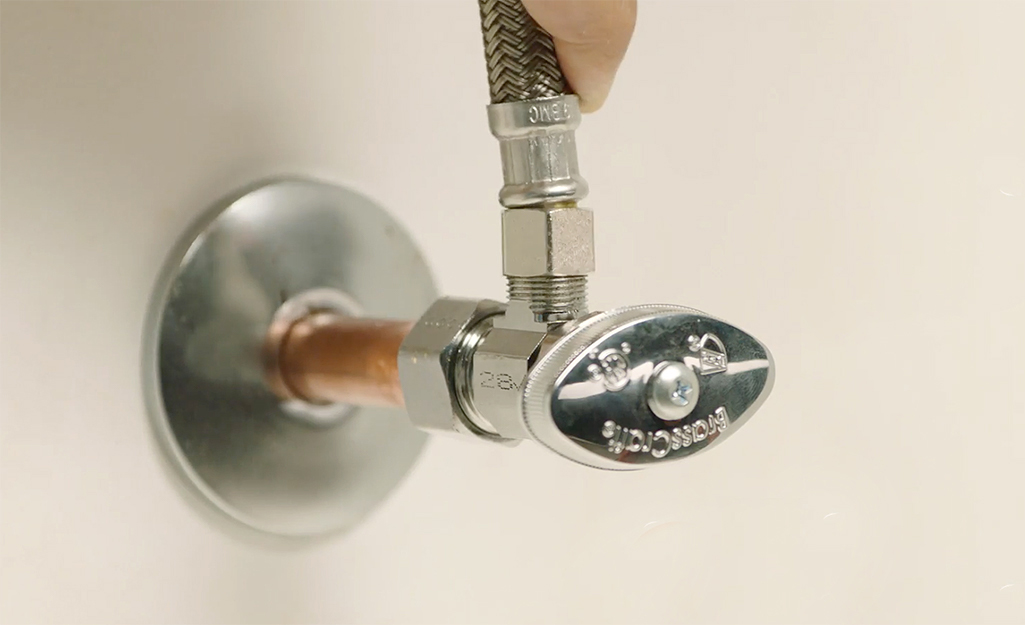
Image Source: contentgrid.homedepot-static.com
Why Replace Your Kitchen Sink Shut-Off Valve?
Shut-off valves, also known as stop valves or angle stops, are crucial components of your plumbing system. They allow you to isolate the water supply to a specific fixture, like your kitchen sink, without shutting off the water to your entire house. This is incredibly useful for maintenance, repairs, or in emergencies.
You might need to replace your kitchen sink shut-off valve if you notice any of these issues:
- Leaking: This is the most common reason. A leak can come from the valve handle, the stem, or where it connects to the pipe. Even a small drip can waste water and potentially cause damage.
- Difficulty Turning: If the valve is stiff, hard to turn, or won’t turn off completely, it’s a sign that it’s failing. This can make future repairs difficult and increase the risk of leaks.
- Corrosion or Damage: Visible rust, cracks, or other physical damage to the valve body indicate it needs replacement.
- Low Water Pressure: While not always the valve’s fault, a clogged or partially closed valve can restrict water flow.
- Age: Shut-off valves, like any plumbing component, have a lifespan. If yours are old and you’re doing other work under the sink, it’s wise to replace them preventatively.
This guide focuses on kitchen faucet shut off valve replacement and replacing water shutoff valve under sink, covering both the hot and cold water lines. We’ll help you with how to change a leaky sink shutoff and provide insights for under sink valve repair.
Gathering Your Tools and Materials
Before you start, ensure you have all the necessary tools and materials. Having everything ready will make the job smoother and faster.
Essential Tools:
- Adjustable Wrench (or Pipe Wrench): You’ll need one or two for loosening and tightening the fittings.
- Plumber’s Tape (PTFE Tape): This tape creates a watertight seal on threaded connections.
- Bucket or Towels: To catch any residual water when you disconnect the old valve.
- Basin Wrench: This specialized tool is very helpful for reaching nuts in tight spaces, especially when attaching the new valve to the faucet supply lines.
- Pliers (Channel-lock or Slip-joint): Useful for gripping various parts.
- Wire Brush: To clean pipe threads.
- Safety Glasses: Protect your eyes from debris and water.
- Work Gloves: For a better grip and to protect your hands.
- Headlamp or Flashlight: To see clearly under the sink.
Replacement Parts:
- New Shut-Off Valves: You’ll need two – one for the hot water line and one for the cold water line. Make sure to get the correct type and size.
- Type: Compression or PEX type are common for sink connections. Compression valves are generally easier for DIYers.
- Connection Size: The most common size for the pipe coming out of the wall is 1/2 inch. The connection to the faucet supply line is usually 3/8 inch. Check your existing setup to be sure.
- Outlet Type: Ensure the outlet matches your flexible supply line’s connector (typically 3/8-inch compression).
- New Flexible Supply Lines (Optional but Recommended): If your old supply lines are stiff, cracked, or old, it’s a good idea to replace them while you’re at it. Ensure they have the correct fittings for your new valves and faucet.
Step-by-Step Guide: Replacing Your Kitchen Sink Shut-Off Valve
Follow these steps carefully for a successful DIY sink valve replacement.
Step 1: Turn Off the Main Water Supply
This is the most critical step. You don’t want to be dealing with water spraying everywhere!
- Locate your home’s main water shut-off valve. It’s often found in the basement, crawl space, garage, or near the water meter.
- Turn the valve handle clockwise until it stops.
- To ensure the water is off, open your kitchen faucet (both hot and cold) to drain any remaining water in the lines and confirm there’s no flow.
Step 2: Prepare the Work Area
- Clear out everything from under the sink to give yourself plenty of space.
- Place a bucket directly under the existing shut-off valves and supply line connections.
- Lay down some old towels or rags around the valves to catch any drips.
Step 3: Disconnect the Flexible Supply Lines from the Old Valves
This is where you’ll need your adjustable wrench.
- Identify the flexible supply lines connecting your faucet to the shut-off valves. There will be one for hot (usually on the left) and one for cold (usually on the right).
- Place one wrench on the nut connecting the supply line to the shut-off valve. You might need a second wrench to hold the valve body steady to prevent it from twisting on the pipe.
- Turn the nut counter-clockwise to loosen and remove it from the valve. Be prepared for a small amount of water to drain into your bucket.
- Repeat this process for the other supply line.
Step 4: Remove the Old Shut-Off Valves
Now, you need to disconnect the old valves from the copper pipe coming out of the wall. This is usually a threaded connection.
- Place your bucket and towels to catch any remaining water.
- Use your adjustable wrench to grip the body of the shut-off valve where it connects to the pipe.
- Hold the valve firmly and turn it counter-clockwise to unscrew it from the pipe.
- Tip: If the valve is very stubborn, apply penetrating oil and let it sit for a few minutes. You might need to gently tap the valve with the wrench handle to break it free.
- Once it’s loose, unscrew it the rest of the way. Be mindful of any water that might still be in the line.
- Repeat for the other shut-off valve.
Step 5: Clean the Pipe Threads
Before installing the new valves, it’s important to clean the threads on the pipe coming out of the wall.
- Use a wire brush to gently scrub away any corrosion, old plumber’s tape, or debris from the pipe threads. Clean threads ensure a good seal for the new valve.
Step 6: Install the New Shut-Off Valves
Now it’s time to install your new water valve for kitchen sink.
- Take your new shut-off valve. You’ll notice the threads on the inlet side of the valve.
- Wrap plumber’s tape (PTFE tape) clockwise around these threads at least 3-4 times. This creates a watertight seal. Ensure the tape is smooth and doesn’t bunch up.
- Carefully thread the new valve onto the pipe coming out of the wall. Turn it clockwise by hand until it’s snug.
- Use your adjustable wrench to tighten the valve an additional half to a full turn. Do not overtighten, as this can crack the valve or damage the pipe. The goal is a firm, secure connection that won’t leak.
- Make sure the valve’s outlet port is facing in a convenient direction for connecting your new supply lines. Most new valves allow you to rotate the body before fully tightening.
- Repeat this process for the other shut-off valve, ensuring you install the correct one for hot and cold water.
Step 7: Reconnect the Flexible Supply Lines
Now you’ll connect the supply lines to the new valves.
- If you are using new supply lines, ensure they have the correct fittings on both ends.
- For each connection, screw the supply line’s nut onto the outlet of the new shut-off valve.
- Tighten the nut by hand until it’s snug.
- Use your adjustable wrench to tighten it an additional quarter to half turn. Again, avoid overtightening. Many flexible supply lines have rubber washers that can be easily damaged by excessive force.
Step 8: Turn the Water Back On and Check for Leaks
This is the moment of truth for your replacing hot water shutoff valve and replacing cold water shutoff valve project.
- Go back to your main water shut-off valve and turn it on slowly by rotating the handle counter-clockwise.
- Return to the kitchen sink and slowly open the new shut-off valves by turning their handles counter-clockwise.
- Carefully inspect all the connections you made: where the supply lines connect to the valves, and where the supply lines connect to the faucet.
- Look and feel for any signs of dripping or moisture. Check for leaks at least for a few minutes.
- If you see any leaks, turn off the main water supply again and gently tighten the leaking connection by a quarter turn. Then, turn the water back on and recheck.
Step 9: Test the Faucet
Once you’ve confirmed there are no leaks:
- Turn on your kitchen faucet and let the water run for a minute or two.
- Check the water flow for both hot and cold.
- Turn the faucet off and check the shut-off valves one last time for any signs of weeping or leaking.
Congratulations! You’ve successfully completed your DIY sink valve replacement and are now fixing kitchen sink water supply issues.
Alternative Scenario: Replacing Valves Directly Attached to the Pipe (Sweat or Push-to-Connect)
While most kitchen sink shut-off valves are threaded compression fittings, some older homes might have valves soldered directly onto copper pipes (sweat fittings) or use push-to-connect fittings. These require different techniques.
Replacing Sweat Valves:
This involves cutting the pipe and soldering new fittings. If you’re not comfortable with soldering, it’s highly recommended to call a plumber.
Tools & Materials for Sweat Valves:
- Pipe cutter
- Propane torch
- Solder
- Flux
- Emery cloth or sandpaper
- New sweat-fit shut-off valves
- Lead-free solder and flux
- Heat-resistant mat
Process (Brief Overview):
- Turn off water and drain lines.
- Cut out the old valve section of the pipe.
- Clean the pipe ends and the inside of the new valve fittings thoroughly.
- Apply flux to the pipe ends and inside the fittings.
- Heat the fitting with the torch and apply solder to the joint. The solder will be drawn into the gap by capillary action.
- Allow to cool completely before turning water on.
Replacing Push-to-Connect Valves:
These are generally easier than sweat valves and don’t require special tools beyond a deburring tool.
Tools & Materials for Push-to-Connect:
- Pipe cutter
- Deburring tool
- Push-to-connect shut-off valves
- (Optional) PEX insertion tool if replacing PEX lines
Process (Brief Overview):
- Turn off water and drain lines.
- Cut out the old valve section of the pipe cleanly.
- Use the deburring tool to smooth the inside and outside edges of the cut pipe.
- Push the new valve firmly onto the pipe until it seats properly. The internal O-rings create the seal.
- Ensure the valve is fully pushed on for a reliable connection.
Troubleshooting Common Issues
Here are some common problems you might encounter and how to solve them during your under sink valve repair.
Valve Won’t Turn Off Completely
- Problem: Even with the handle turned fully clockwise, water still trickles out.
- Cause: The internal washer or seat is worn or damaged.
- Solution: Replacement of the shut-off valve is necessary. This is a sign the valve has failed and cannot be repaired by simple tightening.
Leaking After Installation
- Problem: The new valve or supply line connection is leaking.
- Cause: The connection wasn’t tightened enough, or it was overtightened and damaged.
- Solution: Turn off the water. Gently tighten the connection by about a quarter turn. If it still leaks, you may need to disconnect, re-tape the threads (if applicable), and re-tighten. For supply line connections, ensure the rubber washer inside the nut is seated correctly. If it persists, the supply line or valve might be defective.
Stubborn Old Valve
- Problem: The old valve is extremely difficult to turn or remove.
- Cause: Corrosion, mineral buildup, or age.
- Solution: Apply penetrating oil and let it soak. Use two wrenches: one to hold the pipe fitting and one to turn the valve. Gentle tapping with a wrench handle can sometimes help break it free. If it absolutely will not budge without risking pipe damage, it may be time to call a plumber.
Cross-Contamination (Hot and Cold Mix-up)
- Problem: Hot water now comes from the cold line, or vice-versa.
- Cause: The hot and cold supply lines were accidentally reversed when connecting the new valves or supply lines.
- Solution: Turn off the water. Swap the flexible supply lines at the faucet connections. Ensure the hot supply line goes to the hot faucet inlet and the cold supply line goes to the cold faucet inlet.
When to Call a Professional Plumber
While many shut-off valve replacements are straightforward DIY tasks, there are situations where it’s best to call a professional:
- Uncertainty: If you’re not comfortable with any step of the process or lack the right tools.
- Old Plumbing: If your home has very old galvanized pipes or you encounter significant corrosion that could lead to pipe damage.
- Sweat Fittings: If you have valves that are soldered onto copper pipes and you have no experience with soldering.
- Persistent Leaks: If you’ve tried tightening connections and still have leaks, a plumber can diagnose the issue.
- Main Shut-Off Valve Issues: If your main water shut-off valve is faulty, it’s a more serious problem requiring professional attention.
Frequently Asked Questions (FAQ)
Q1: How often should I replace my kitchen sink shut-off valves?
A1: There’s no strict schedule, but if your valves are older than 15-20 years, or if you notice any of the signs mentioned above (leaking, stiffness), it’s wise to replace them. It’s a preventative measure that can save you from water damage.
Q2: What size shut-off valves do I need for my kitchen sink?
A2: Most kitchen sinks use 1/2-inch nominal copper pipe, so the inlet connection on your shut-off valve will typically be 1/2-inch IPS (Iron Pipe Size). The outlet connection that your flexible supply line screws onto is most commonly 3/8-inch compression. Always double-check your existing connections to be sure.
Q3: Can I just replace the washer in my shut-off valve instead of the whole valve?
A3: For most modern kitchen sink shut-off valves, replacing the internal components is not practical or possible. They are generally designed to be replaced as a complete unit when they fail. Older gate valves might have replaceable parts, but angle stops or ball valves typically do not.
Q4: What is plumber’s tape used for?
A4: Plumber’s tape, also known as PTFE tape or Teflon tape, is used to seal threaded pipe connections. When you wrap it around the threads, it fills in any small gaps, creating a watertight seal and preventing leaks. It also acts as a lubricant, making it easier to tighten and later loosen threaded connections.
Q5: Do I need to turn off the water to the entire house to replace just one sink valve?
A5: Yes. To safely and effectively replace a kitchen sink shut-off valve, you must turn off the main water supply to your house. This ensures that no water is flowing through the pipes while you are disconnecting and reconnecting components, preventing flooding.
By following this comprehensive guide, you should feel confident in tackling the task of installing new shut-off valve for sink. Remember to work slowly, double-check your connections, and prioritize safety. A well-maintained plumbing system contributes to a healthy and stress-free home.