
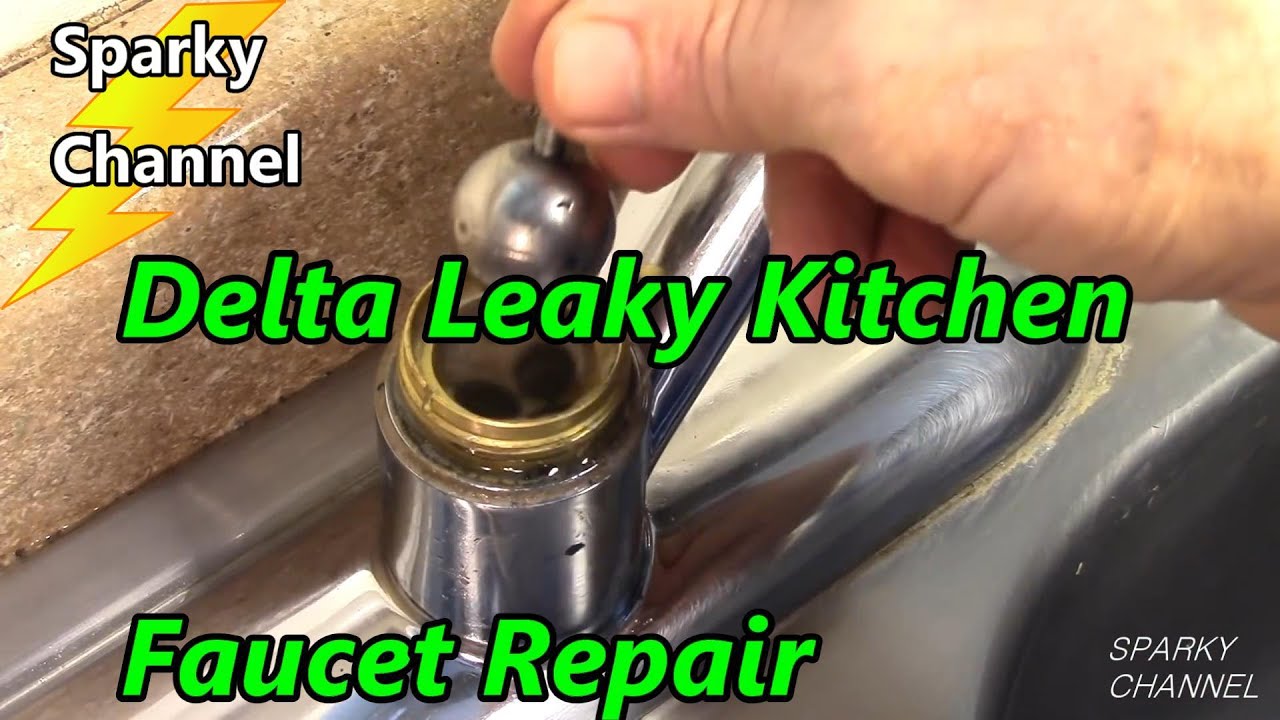
Image Source: i.ytimg.com
Fix Your Delta Faucet: How To Repair A Delta Kitchen Faucet
Can you repair a Delta kitchen faucet yourself? Yes, most common Delta faucet issues, like leaks and low water pressure, can be fixed with basic tools and some simple steps. Who should you call if you can’t fix it? If you’re uncomfortable with DIY repairs or the problem persists, a licensed plumber is your best bet. This guide will walk you through the common problems and how to tackle them, making Delta faucet repair accessible for homeowners.
Delta faucets are a popular choice for kitchens, known for their durability and stylish designs. However, like any plumbing fixture, they can experience wear and tear over time, leading to common issues. Whether you’re dealing with a leaky Delta faucet, a stiff handle, or reduced water flow, many problems can be resolved with straightforward DIY kitchen faucet repair. This comprehensive guide will help you diagnose and fix your Delta sink faucet, saving you time and money.
Essential Tools for Delta Faucet Repair
Before you start any Delta faucet repair, gathering the right tools is crucial. Having these on hand will make the process smoother and prevent unnecessary trips to the hardware store.
- Adjustable Wrench: This is your primary tool for loosening and tightening nuts and fittings.
- Phillips Head Screwdriver: For removing handles and other components held by screws.
- Flathead Screwdriver: Useful for prying off caps or gently loosening certain parts.
- Pliers (Slip-joint or Channel-lock): Can provide extra grip on stubborn parts.
- Allen Wrench Set: Many Delta faucets use small hex screws to secure handles.
- Plumber’s Grease or Silicone Lubricant: Essential for lubricating O-rings and cartridges to ensure smooth operation and prevent future leaks.
- Rag or Towel: To catch drips and protect your sink’s finish.
- Bucket or Basin: To place under the faucet to collect any residual water.
- Penetrating Oil (e.g., WD-40): For loosening corroded or stuck parts.
- Replacement Parts: Depending on the issue, you might need Delta kitchen faucet parts like a new cartridge, O-rings, or a diverter.
Common Delta Faucet Problems and Their Solutions
Let’s dive into the most frequent issues homeowners face with their Delta kitchen faucets and how to address them.
1. The Leaky Delta Faucet: Fixing a Dripping Spout
A dripping faucet is not only annoying but also a waste of water. The most common culprit for a leaky Delta faucet is a worn-out cartridge. The cartridge is the heart of the faucet, controlling water flow and temperature.
How to Fix a Dripping Faucet: Step-by-Step
Here’s how to tackle a dripping spout by performing a Delta faucet cartridge replacement:
- Turn Off the Water Supply: This is the most important first step. Look for the shut-off valves located beneath your sink. They are usually small knobs or levers connected to the hot and cold water lines. Turn them clockwise until they are snug. If you can’t find or turn these valves, you’ll need to shut off the main water supply to your house.
- Drain Remaining Water: Turn the faucet on to release any water left in the lines.
- Remove the Faucet Handle:
- Look for a decorative cap on the handle, often marked with blue (cold) and red (hot) indicators. Gently pry this cap off with a flathead screwdriver or a utility knife.
- Underneath the cap, you’ll find a screw. Use the appropriate screwdriver (usually Phillips head) to remove it.
- Once the screw is removed, the handle should lift straight up. If it’s stuck, a gentle wiggle or a bit of penetrating oil might help. Be patient and avoid forcing it, as this can damage the faucet.
- Expose the Cartridge:
- With the handle removed, you’ll see a decorative bonnet or cap. Unscrew this by hand or with an adjustable wrench. Some models might have a retaining clip or nut holding the cartridge in place.
- For Single-Handle Faucets: You’ll likely see a brass or plastic cartridge. Many Delta single-handle faucets use a specific type of cartridge (like the Delta RPxxx series).
- For Two-Handle Faucets: Each handle controls either hot or cold water. You’ll need to remove the handle and then unscrew the valve stem assembly.
- Remove the Old Cartridge:
- Many Delta cartridges have a retaining clip that needs to be pulled out using needle-nose pliers or a small flathead screwdriver.
- Once the clip is removed, you should be able to pull the cartridge straight out. If it’s stubborn, you might need a cartridge puller tool, which can be rented or purchased from a hardware store. This is often necessary for older cartridges that have become corroded or seated tightly.
- Install the New Cartridge:
- Before inserting the new Delta faucet cartridge replacement, compare it to the old one to ensure it’s identical. Make sure the orientation is correct; there’s usually a specific way it fits into the faucet body.
- Apply a thin layer of plumber’s grease to the rubber seals on the new cartridge.
- Slide the new cartridge into the faucet body.
- Reinsert the retaining clip if your model uses one.
- Reassemble the Faucet:
- Screw the bonnet or cap back into place.
- Reattach the handle, ensuring it’s positioned correctly.
- Replace the handle screw and the decorative cap.
- Test for Leaks:
- Slowly turn the water supply back on.
- Check for any drips from the spout or around the handle. If the leak persists, double-check that all connections are tight and that you have the correct replacement cartridge.
2. Low Water Pressure or Reduced Flow
When water pressure seems low from your Delta sink faucet, it can be due to a few things. Often, it’s a clogged aerator, but sometimes it can be a buildup of sediment within the faucet itself or the supply lines.
Addressing Low Water Flow:
- Clean the Aerator:
- The aerator is the small screen at the tip of the spout. It can easily get clogged with mineral deposits.
- Unscrew the aerator from the spout, usually by hand or with an adjustable wrench (use a rag to protect the finish).
- Disassemble the aerator (it usually has a screen, washer, and casing).
- Rinse all the parts under running water. For stubborn buildup, soak the parts in a solution of equal parts white vinegar and water for a few hours. You can use an old toothbrush to gently scrub away deposits.
- Reassemble the aerator and screw it back onto the spout.
- Check Supply Lines:
- If cleaning the aerator doesn’t help, turn off the water supply.
- Disconnect the supply lines from the shut-off valves.
- Place a bucket underneath to catch any water.
- Check the screens inside the supply line connectors for any debris or sediment. Clean them carefully.
- Cartridge Check (if applicable): In some cases, a partially blocked cartridge can also restrict water flow. If you’ve recently replaced a cartridge and the problem persists, or if the low flow started after a specific event (like plumbing work elsewhere in the house), the cartridge might be the issue.
3. Delta Faucet Handle Repair: A Stiff or Loose Handle
A loose handle can be a sign of a loose set screw, while a stiff handle might indicate a need for lubrication or a worn-out cartridge.
Tightening or Lubricating the Handle:
- Tighten the Set Screw:
- Follow steps 3 from the “Leaky Delta Faucet” section to remove the handle and expose the set screw.
- This screw is often located on the underside or back of the handle assembly. Use the appropriate Allen wrench to tighten it.
- Reassemble the handle and test its stability.
- Lubricate Moving Parts:
- If the handle is stiff, after removing the handle and bonnet/cap, try gently lubricating the stem of the cartridge or the valve stem (for two-handle faucets) with plumber’s grease.
- Work the stem back and forth a few times before reinstalling the handle.
- If lubrication doesn’t help, the cartridge itself might be the problem, and a Delta faucet cartridge replacement may be in order.
4. Water Leaking from the Base of the Spout
This type of leak usually points to worn-out O-rings located at the base of the spout assembly.
Replacing Spout O-Rings:
- Turn Off Water and Drain: As always, shut off the water supply under the sink and drain the faucet.
- Remove the Spout:
- This varies by model. Some spouts simply lift off after removing the handle assembly and any retaining screws or clips.
- Others might have a retaining nut or collar at the base of the spout that needs to be unscrewed with an adjustable wrench.
- Be careful not to scratch the finish.
- Locate and Replace O-Rings:
- Once the spout is off, you’ll see one or more rubber O-rings on the faucet body where the spout sits.
- Carefully remove the old O-rings using a small, flat tool or screwdriver.
- Clean the area where the O-rings sit.
- Lubricate the new O-rings with plumber’s grease and slide them into place. Ensure they are seated correctly.
- Reassemble and Test:
- Slide the spout back onto the faucet body.
- Reinstall any retaining nuts, screws, or clips.
- Turn the water back on slowly and check for leaks.
Advanced Delta Faucet Repair: Replacing the Entire Faucet
Sometimes, a faucet is beyond simple repair, or you might simply want to upgrade to a newer model. While not strictly a repair, Delta faucet installation is a common DIY task that homeowners can undertake.
Steps for Delta Faucet Installation:
- Gather Your Tools and New Faucet: Ensure you have all necessary tools and your new Delta faucet is ready.
- Turn Off Water and Disconnect Old Faucet:
- Shut off the water supply under the sink.
- Disconnect the hot and cold water supply lines from the old faucet’s inlets.
- Unscrew the mounting nuts that hold the old faucet in place. These are usually large nuts on the underside of the sink.
- Remove the old faucet from the sink.
- Prepare the Sink Surface: Clean the sink surface where the old faucet was mounted.
- Install the New Faucet:
- Follow the manufacturer’s instructions for your specific Delta faucet model. This usually involves placing gaskets or putty to create a seal.
- Feed the faucet’s hoses through the sink holes.
- From underneath the sink, secure the faucet with the provided mounting hardware (washers and nuts). Tighten them snugly, ensuring the faucet is aligned correctly.
- Connect Water Supply Lines:
- Connect the new hot and cold water supply lines to the corresponding inlets on the new faucet.
- Connect the other ends of the supply lines to the shut-off valves. Ensure a snug connection.
- Turn On Water and Test:
- Turn the water supply back on slowly.
- Check all connections for leaks.
- Turn on the new faucet to test water flow and temperature control. Flush the lines for a minute or two to clear out any debris.
Maintaining Your Delta Faucet for Longevity
Proper kitchen faucet maintenance can prevent many common issues and extend the life of your Delta faucet.
- Regular Cleaning: Wipe down your faucet regularly with a soft, damp cloth to remove water spots and prevent mineral buildup. Avoid abrasive cleaners that can scratch the finish.
- Check for Leaks: Periodically check for any small drips or leaks around the handles or spout. Addressing minor issues early can prevent bigger problems.
- Inspect Aerator: Clean the aerator every few months, especially if you have hard water, to maintain optimal water flow.
- Lubricate Moving Parts: Once a year, or if you notice a stiff handle, consider lubricating the cartridge stem.
Identifying Your Delta Faucet Model
Knowing your specific Delta faucet model is crucial when ordering Delta kitchen faucet parts. Delta offers a vast range of models, and parts are not always interchangeable.
- Check the Faucet Itself: Look for a model number or name etched on the faucet body, often on the back or underneath the spout.
- Original Packaging or Manual: If you still have the box or instruction manual from when the faucet was purchased or installed, the model information will be there.
- Manufacturer’s Website: Delta Faucet has an excellent support section on their website. You can often identify your faucet by looking at pictures or using their “Find My Faucet” tool. You can then search for specific Delta faucet parts or troubleshooting guides for that model.
Common Delta Faucet Cartridge Types
Delta uses several types of cartridges, but the most common are:
- Single-Handle Cartridges: These are typically cylindrical and control both hot and cold water. Examples include the Delta MultiChoice Universal Rough-In Valve and various specific single-handle cartridges (e.g., RP50587).
- Two-Handle Cartridges/Valve Stems: These are usually more compact and control either hot or cold water independently.
When purchasing a Delta faucet cartridge replacement, it’s vital to match the part number exactly to your existing cartridge.
Troubleshooting Table: Quick Fixes for Common Delta Faucet Problems
| Problem | Likely Cause | Solution |
|---|---|---|
| Dripping Faucet | Worn-out cartridge, O-rings | Delta faucet cartridge replacement, check/replace O-rings. |
| Low Water Pressure | Clogged aerator, debris in supply lines/cartridge | Clean aerator, flush supply lines, check cartridge for blockage. |
| Leaky Base of Spout | Worn O-rings at spout base | Replace spout O-rings. |
| Stiff Handle | Lack of lubrication, worn cartridge | Lubricate cartridge stem, consider Delta faucet cartridge replacement. |
| Loose Handle | Loose set screw | Tighten the set screw using an Allen wrench. |
| Water Splashing Excessively | Missing or clogged aerator | Reinstall or clean/replace the aerator. |
| No Hot or Cold Water | Improper cartridge installation, shut-off valve | Ensure cartridge is correctly seated, check shut-off valves are fully open. |
Frequently Asked Questions About Delta Faucet Repair
Q1: How often should I replace my Delta faucet cartridge?
A: There’s no set schedule. A cartridge typically lasts for many years, but you’ll know it needs replacing when you experience persistent leaks or handle issues that cleaning and lubrication can’t fix.
Q2: Can I use a generic cartridge instead of a Delta-specific one?
A: It’s highly recommended to use genuine Delta kitchen faucet parts, including their cartridges. Generic parts may not fit correctly or provide the same performance and durability, potentially leading to further problems.
Q3: My faucet is old; is it worth repairing or should I replace it?
A: If your faucet is frequently malfunctioning or showing signs of corrosion and wear beyond the cartridge, it might be more cost-effective and satisfying to replace the entire unit. This is a good opportunity for a Delta faucet installation of a newer, more efficient model.
Q4: What if I can’t find the model number for my Delta faucet?
A: You can try to identify it using the Delta Faucet website’s visual guides. Take clear photos of your faucet from different angles and compare them to the models shown. You can also call Delta customer service for assistance.
Q5: How do I know which replacement cartridge to buy?
A: The most reliable way is to remove the old cartridge and match its part number. If you can’t remove it or can’t see a number, identifying your faucet model first is key. Then, use that model number to find the correct Delta faucet parts online or at a plumbing supply store.
By following these steps, you can confidently tackle most common issues with your Delta kitchen faucet. Whether it’s a simple fix for a leaky Delta faucet or a more involved Delta faucet cartridge replacement, performing DIY kitchen faucet repair can save you money and give you a sense of accomplishment. Remember to always prioritize safety by shutting off the water supply and working carefully. If a problem seems too complex, don’t hesitate to call a professional plumber. Regular kitchen faucet maintenance will ensure your faucet continues to function smoothly for years to come.