
The standard kitchen counter height in most homes is 36 inches (approximately 91.4 cm) from the floor to the top surface of the countertop. This height is considered the optimal kitchen counter height for most adults performing typical kitchen tasks.
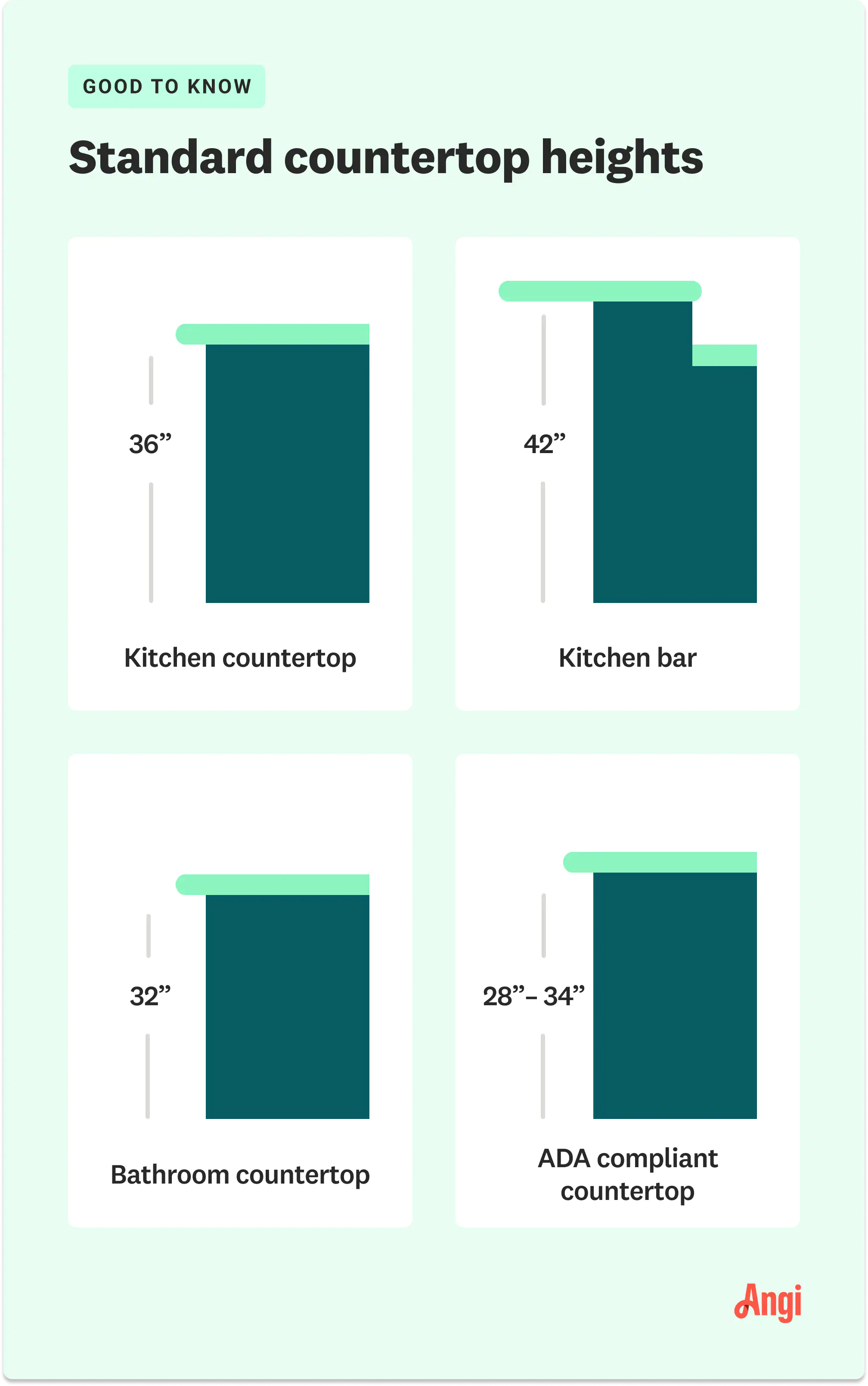
Image Source: media.angi.com
Deciphering the Dimensions: The Standard Kitchen Counter Height
When you’re planning a kitchen renovation or simply curious about your own culinary workspace, knowing the standard kitchen counter height is fundamental. The 36-inch figure is not arbitrary; it’s a result of decades of ergonomic research and practical application. This typical kitchen counter dimensions aim to provide a comfortable and efficient workspace for a wide range of people.
Why is 36 inches the standard?
- Ergonomics: This height allows most adults to chop, prepare, and cook without excessive bending or reaching. It promotes good posture and reduces strain on the back and arms.
- Accessibility: It’s a height that generally works well for various kitchen tasks, from washing dishes to rolling out dough.
- Cabinetry: Standard base cabinets are typically 34.5 inches tall, and when you add a 1.5-inch countertop, you reach the 36-inch standard. This close relationship between cabinet and countertop height is key to the overall functionality.
Exploring the Typical Kitchen Counter Dimensions
While 36 inches is the gold standard, it’s important to remember that “typical” can encompass a slight range, and personal preference plays a significant role. Let’s dive deeper into the nuances of kitchen counter dimensions.
Standard Kitchen Cabinet Height
The foundation of your countertop is your kitchen cabinets. Standard kitchen cabinet height, specifically for base cabinets, is usually 34.5 inches. These cabinets house drawers, shelves, and appliances, providing the necessary structure. When paired with a countertop, they form the core of your kitchen work area.
Kitchen Counter Depth
Beyond height, kitchen counter depth is also a crucial consideration. The standard kitchen counter depth is 24 inches. This depth provides ample space for appliances like microwaves or toasters to sit on the counter without protruding too far into the walkway. It also offers enough room for prepping food comfortably.
- Why 24 inches? This depth balances workspace with traffic flow. Too shallow, and you’ll feel cramped; too deep, and you might lose valuable floor space.
- Variations: Some custom kitchens might opt for deeper countertops, especially in areas where more extensive prep work is done or for specific appliance integration. However, 24 inches remains the most common and practical choice.
The Kitchen Island Height Factor
Kitchen islands often present a slight variation in height. While many islands are built to match the standard 36-inch counter height, some incorporate a seating area. In such cases, the island might feature a raised section.
- Standard Counter Height Island: If the island primarily serves as an extension of your prep space or an additional workspace, it will likely be at the standard 36 inches.
- Bar Height Island: If the island is designed to accommodate bar stools, the countertop height might be closer to 40-42 inches. This allows for comfortable seating with standard bar stools.
- Counter Height Island: Some islands blend both functions. They might have a lower section for prep work (36 inches) and a raised section (around 42 inches) for seating.
Finding Your Optimal Kitchen Counter Height
While the standard is a great starting point, the ideal kitchen counter height for you might be slightly different. Fostering a comfortable kitchen counter height is essential for enjoying your time in the kitchen.
Factors Influencing Your Ideal Height:
- Your Height: Taller individuals might find a slightly higher counter more comfortable, reducing the need to stoop. Shorter individuals might prefer a slightly lower counter.
- Type of Tasks: If you spend a lot of time rolling dough or doing intricate tasks that require leaning over, a slightly lower counter might be preferable. For tasks that involve standing upright, like chopping vegetables, the standard height is usually perfect.
- Who Uses the Kitchen: If children use the kitchen frequently, considering a lower section or a dedicated prep area might be beneficial.
Adjusting for Comfort:
- Taller Individuals (6 feet and above): You might find a counter height of 37-38 inches more comfortable.
- Shorter Individuals (5 feet 4 inches and below): A counter height of 34-35 inches could be more ergonomic.
- Children: A separate, lower counter section or a sturdy cutting board placed on the standard counter can make the kitchen more accessible for younger chefs.
The Standard Countertop Height and Accessibility
The 36-inch standard kitchen worktop height is also crucial for accessibility, particularly for individuals with disabilities or those who use wheelchairs.
- Wheelchair Accessibility: For wheelchair users, a standard 36-inch counter height can be too high. Accessible kitchen design often incorporates lowered counter sections. A common recommendation for wheelchair-accessible countertops is around 30-34 inches, with ample knee space underneath.
- ADA Guidelines: While not all residential kitchens must adhere strictly to the Americans with Disabilities Act (ADA) guidelines, they offer valuable insights into accessible design. ADA guidelines suggest a maximum counter height of 36 inches, with a minimum clear floor space and a continuous knee and toe clearance underneath.
Kitchen Counter Depth Variations and Their Impact
While 24 inches is the standard kitchen counter depth, there are reasons why you might deviate from this.
Deeper Countertops:
- Benefits: Offer more workspace, can accommodate larger appliances without crowding the prep area, and can create a more substantial visual presence.
- Considerations: Can reduce overall floor space, potentially making the kitchen feel smaller. Ensure adequate clearance between the counter and island or opposite walls (a minimum of 42 inches is recommended for main walkways).
Shallower Countertops:
- Benefits: Can be useful in smaller kitchens or galley kitchens where maximizing floor space is critical.
- Considerations: Limit workspace and can make it challenging to fit standard-depth appliances.
The Relationship Between Countertop and Cabinetry
The synergy between your base cabinets and countertop is what creates that consistent and functional surface.
Standard Kitchen Cabinet Height and Countertop Integration:
As mentioned, standard base cabinets are 34.5 inches tall. When a typical 1.5-inch thick countertop is installed, it brings the total height to the familiar 36 inches. This is why when you purchase cabinetry, you’re essentially buying the components that will build up to your finished counter height.
- Cabinet Box Height: This is the measurement of the cabinet structure itself, excluding the doors and hardware.
- Countertop Thickness: Countertops vary in thickness from less than 1 inch to over 3 inches, depending on the material. This thickness needs to be factored in when determining the final counter height.
Material Matters: How Countertop Thickness Affects Height
The material you choose for your kitchen worktop height can influence the final measurement.
- Laminate Countertops: Typically come in 1.5-inch thickness, making them ideal for achieving the standard 36-inch height with standard base cabinets.
- Solid Surface (e.g., Corian): Often 0.5 inches or 0.75 inches thick. To reach 36 inches, you might need a thicker substrate or taller cabinets.
- Granite, Quartz, Marble: These natural and engineered stones are usually available in 2 cm (approx. 0.75 inches) and 3 cm (approx. 1.25 inches) thicknesses. A 3 cm slab paired with standard cabinets will result in a final height of approximately 35.75 inches, very close to the standard.
- Butcher Block: Can vary significantly in thickness, from 1.5 inches to 4 inches or more.
Table: Common Countertop Materials and Thicknesses
| Material | Typical Thickness Options | Impact on Standard Height (with 34.5″ cabinets) |
|---|---|---|
| Laminate | 1.5 inches | 36 inches |
| Quartz | 0.75 inches, 1.25 inches | 35.25 inches, 35.75 inches |
| Granite | 0.75 inches, 1.25 inches | 35.25 inches, 35.75 inches |
| Solid Surface | 0.5 inches, 0.75 inches | 35 inches, 35.25 inches |
| Butcher Block | 1.5 inches – 4+ inches | Varies significantly |
| Concrete | 1.5 inches – 3+ inches | Varies significantly |
Considering the Kitchen Worktop Height in Design
The kitchen worktop height is a critical element in kitchen design. It impacts not only functionality but also the overall aesthetic and feel of the space.
Functionality First:
The goal is to create a space that is a joy to work in. An optimal kitchen counter height minimizes physical strain, making cooking, cleaning, and entertaining more enjoyable.
- Preventing Back Pain: A counter that is too low forces you to hunch over, leading to back pain and fatigue.
- Reducing Arm Strain: A counter that is too high can cause your shoulders to tense up and your arms to feel tired.
Aesthetic Considerations:
While functionality is paramount, the height can also influence the visual flow of your kitchen.
- Proportion: The height of your counters should feel proportionate to the rest of your kitchen cabinetry and appliances.
- Flow: In open-plan kitchens, consistent counter heights can help create a sense of cohesion and flow between different zones.
Customizing Your Kitchen Counter Height
For those who don’t fit the “average” mold or have specific needs, customizing the height is a viable option.
Custom Cabinetry:
- Pros: Allows for precise control over the base cabinet height, ensuring you achieve your desired final countertop height.
- Cons: Typically more expensive than standard cabinets.
Custom Countertops:
- Pros: Can be fabricated to specific thicknesses, allowing you to fine-tune the final height when paired with standard cabinets.
- Cons: Might have longer lead times and can be more costly depending on the material.
Non-Standard Solutions:
- Risers or Substrates: For thinner countertops, you can use a plywood substrate under the countertop material to build up the height. This is a more budget-friendly way to achieve a custom height with standard cabinets.
- Adjustable Height Systems: While less common in residential kitchens, some commercial or specialized settings use adjustable height counter systems.
Frequently Asked Questions (FAQ)
Q1: What is the standard kitchen counter height?
A1: The standard kitchen counter height is 36 inches from the floor to the top of the countertop.
Q2: What is the standard kitchen cabinet height?
A2: Standard kitchen base cabinets are typically 34.5 inches tall, and when combined with a 1.5-inch countertop, they reach the 36-inch standard.
Q3: Can I have kitchen counters at a different height?
A3: Yes, you can customize your kitchen counter height. Factors like your own height and specific ergonomic needs can lead you to choose a different height, often achieved through custom cabinetry or countertop fabrication.
Q4: What is the ideal kitchen counter height for someone tall?
A4: For individuals who are 6 feet or taller, a counter height of 37-38 inches may be more comfortable and ergonomic.
Q5: What is the ideal kitchen counter height for someone short?
A5: For individuals who are 5 feet 4 inches or shorter, a counter height of 34-35 inches might provide better comfort and ease of use.
Q6: What is the standard kitchen counter depth?
A6: The standard kitchen counter depth is 24 inches.
Q7: How does kitchen island height differ from standard counter height?
A7: While many kitchen islands match the standard 36-inch counter height, islands designed for seating are often taller, around 40-42 inches, to accommodate bar stools comfortably.
Q8: What is the most comfortable kitchen counter height?
A8: The most comfortable kitchen counter height is subjective and depends on individual body proportions and the tasks performed. However, the standard 36 inches is designed to be comfortable for the average adult.
Q9: What is the kitchen worktop height for baking?
A9: For baking, many find a slightly lower counter height, perhaps 1-2 inches below the standard 36 inches, more comfortable for tasks like kneading dough or rolling pastry. However, the standard height is still perfectly usable for most baking activities.
Q10: How do I determine the optimal kitchen counter height for my home?
A10: To determine your optimal kitchen counter height, consider your own height, the height of other primary users of the kitchen, and the types of tasks you perform most often. Trying out different heights in a showroom or using mock-ups can also be helpful.