
What is the most common way to say kitchen counter in Spanish? The most common and widely understood term for “kitchen counter” in Spanish is “encimera de cocina”. However, depending on the region and specific context, other terms might be used.
Talking about your kitchen is a great way to connect with people, whether you’re planning a trip to a Spanish-speaking country, hosting Spanish-speaking guests, or simply learning the language. The kitchen is the heart of the home for many, and knowing how to refer to its key components, like the counter, is essential. This guide will help you clearly and accurately say “kitchen counter” in Spanish.
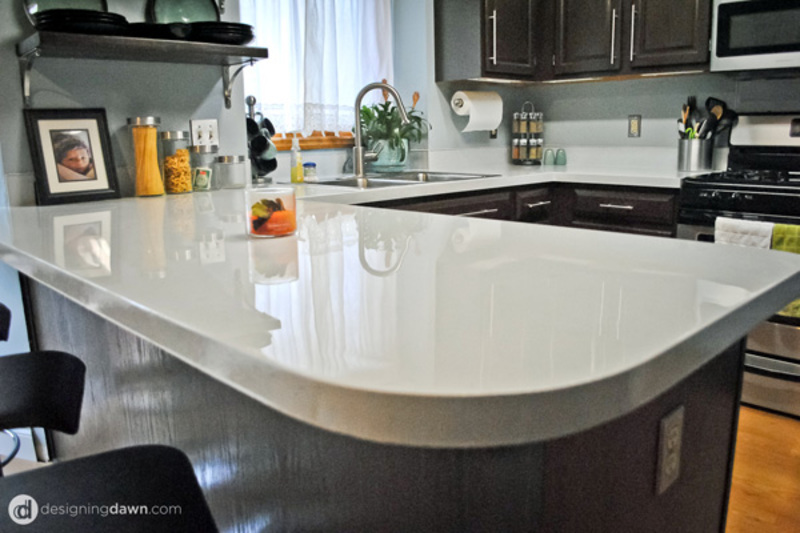
Image Source: cdn.hinative.com
Deciphering the Spanish Terms for Kitchen Counter
Spanish, like English, has a rich vocabulary, and terms can vary by region. While “encimera de cocina” is generally the go-to phrase, it’s helpful to know other options and when to use them.
“Encimera de cocina”: The Most Common Choice
“Encimera” itself refers to a flat, horizontal surface, often used for work. When you add “de cocina” (of the kitchen), you specify its location and function. This term is prevalent throughout Spain and many parts of Latin America. It’s a safe bet and will be understood by most Spanish speakers.
- Meaning: Literally translates to “kitchen countertop” or “kitchen work surface.”
- Usage: This is the most direct and universally recognized translation.
“Mesada de cocina”: A Common Alternative
In several Latin American countries, particularly in the Southern Cone (Argentina, Uruguay, Paraguay), “mesada de cocina” is very common. “Mesada” can refer to a larger table or a flat surface, and “de cocina” again specifies its location.
- Meaning: Also translates to “kitchen countertop” or “kitchen table/surface.”
- Usage: Widely used in countries like Argentina, Uruguay, and Chile.
“Cubierta de cocina”: Another Possibility
“Cubierta” means “cover” or “surface.” In some contexts, “cubierta de cocina” can be used to refer to the kitchen counter, emphasizing its role as a surface. This term might be less common than “encimera” or “mesada” for the main kitchen counter, but it can be encountered.
- Meaning: “Kitchen surface” or “kitchen covering.”
- Usage: Can refer to the countertop, but might also be used for other flat surfaces in the kitchen.
“Superficie de cocina”: A More General Term
“Superficie” is the direct translation for “surface.” Therefore, “superficie de cocina” is a more general term for any flat surface in the kitchen. While it can certainly include the counter, it might also refer to shelves or other flat areas.
- Meaning: “Kitchen surface.”
- Usage: More general; can include counters but also other flat areas.
“Mostrador de cocina”: Sometimes Used, but Can Be Confusing
“Mostrador” typically refers to a counter where transactions happen, like a shop counter or a bar counter. While some might use “mostrador de cocina” for a kitchen counter, especially if it has an overhang for seating (like a breakfast bar), it can be a bit ambiguous. It’s less common for the primary work surface.
- Meaning: “Kitchen counter” (often implies a bar-like counter).
- Usage: Less common for the main work surface; more likely for a breakfast bar or island.
“Tabla de cocina”: Not the Countertop
It’s important to distinguish “tabla de cocina”. This refers to a cutting board, not the countertop itself. So, while it’s a kitchen item, it’s not what you’re looking for when referring to the main work surface.
- Meaning: Cutting board.
- Usage: Specifically for the board used for chopping ingredients.
Beyond the Counter: Related Kitchen Furniture and Features
When discussing kitchen counters, it’s also helpful to know related terms. Spanish has specific words for different types of kitchen furniture and features.
“Mueble de cocina”: The Broader Category
“Mueble de cocina” is a general term for “kitchen furniture” or “kitchen cabinetry.” This encompasses not only the countertops but also the cabinets below and above them, as well as any freestanding units like pantries.
- Meaning: Kitchen furniture or cabinetry.
- Usage: A broad term covering all kitchen storage and work units.
“Material de cocina”: What the Counter is Made Of
When you want to talk about what your kitchen counter is made from, you’d use “material de cocina”. This could be granite, marble, laminate, wood, etc.
- Meaning: Kitchen material.
- Usage: Refers to the substance used to make kitchen elements, including countertops.
“Isla de cocina”: The Kitchen Island
Many modern kitchens feature an “isla de cocina”, or kitchen island. This is a freestanding counter unit that provides extra workspace, storage, and often seating. It’s a distinct feature from the main counter that runs along the walls.
- Meaning: Kitchen island.
- Usage: Refers to a standalone counter unit in the kitchen.
“Barra de cocina”: The Kitchen Bar
Similar to a kitchen island with an overhang, a “barra de cocina” is a bar or counter specifically designed for seating, often attached to the main counter or an island. It’s where people might sit to eat or chat while someone cooks.
- Meaning: Kitchen bar.
- Usage: A counter designed for seating.
Regional Variations and Nuances
The beauty of Spanish lies in its regional diversity. What’s common in one country might be less so in another.
| Term | Primary Region(s) of Use | Description |
|---|---|---|
| Encimera de cocina | Spain, widespread | Most common and universally understood term for kitchen countertop. |
| Mesada de cocina | Argentina, Uruguay, Chile | Very common in Southern Cone countries. |
| Cubierta de cocina | Less common, some regions | Refers to the surface, can be used for countertops. |
| Superficie de cocina | General | A broad term for any flat kitchen surface, including counters. |
| Mostrador de cocina | Less common, some regions | Can refer to a counter, especially one used for seating (like a breakfast bar). |
Example Scenario:
Imagine you are in Buenos Aires, Argentina, and you want to buy a new kitchen counter. You would likely ask for an “encimera de cocina” or more specifically, a “mesada de cocina”. If you were in Madrid, Spain, “encimera de cocina” would be the natural choice.
Describing Your Kitchen Counter
Once you know the term, you might want to describe it. Here are some helpful phrases:
Materials Commonly Used for Kitchen Counters
- Granito: Granite
- Mármol: Marble
- Cuarzo: Quartz
- Madera: Wood
- Laminado: Laminate
- Acero inoxidable: Stainless steel
- Concreto: Concrete
Example Sentences:
- “Mi encimera de cocina es de granito.” (My kitchen counter is granite.)
- “Busco una mesada de cocina de madera.” (I am looking for a wooden kitchen counter.)
- “La cubierta de cocina de mármol es muy bonita.” (The marble kitchen surface is very beautiful.)
Features and Styles
- Limpio/a: Clean
- Amplio/a: Spacious, ample
- Moderno/a: Modern
- Clásico/a: Classic
- Resistente: Resistant, durable
- Fácil de limpiar: Easy to clean
Example Sentences:
- “Necesitamos una superficie de cocina que sea fácil de limpiar.” (We need a kitchen surface that is easy to clean.)
- “La isla de cocina tiene una barra de cocina para comer.” (The kitchen island has a kitchen bar for eating.)
Practical Usage and Conversation Starters
Knowing the right words helps you navigate conversations and express yourself clearly.
Talking About Renovation or Decoration
If you’re discussing a kitchen renovation or redecorating, you’ll definitely need these terms.
- “¿Qué material de cocina recomiendas para la encimera?” (What kitchen material do you recommend for the countertop?)
- “Vamos a cambiar la mesada de cocina por una más moderna.” (We are going to change the kitchen counter for a more modern one.)
- “Me gustaría instalar una isla de cocina con barra de cocina.” (I would like to install a kitchen island with a kitchen bar.)
Everyday Kitchen Activities
When talking about cooking or preparing food, the counter is central.
- “Pon las verduras sobre la encimera de cocina.” (Put the vegetables on the kitchen counter.)
- “Necesito espacio en la mesada de cocina para cortar el pan.” (I need space on the kitchen counter to cut the bread.)
- “Limpia la superficie de cocina después de cocinar.” (Clean the kitchen surface after cooking.)
Common Mistakes to Avoid
When learning new vocabulary, it’s easy to mix up similar terms.
- Confusing “mostrador” with “encimera”: While “mostrador” can sometimes refer to a counter, it’s best to stick to “encimera” or “mesada” for the primary kitchen work surface to avoid confusion, especially if you’re not in a region where “mostrador” is commonly used for kitchen counters.
- Using “tabla de cocina” for the counter: Remember, “tabla de cocina” is a cutting board. Using it for the countertop would be incorrect and might lead to humorous misunderstandings.
Comprehending the Differences: A Quick Summary
Let’s revisit the key terms to solidify your understanding.
| Term | Main Meaning | Typical Context |
|---|---|---|
| Encimera de cocina | Kitchen Countertop | General use, especially in Spain. |
| Mesada de cocina | Kitchen Countertop | Common in South America (e.g., Argentina, Uruguay). |
| Cubierta de cocina | Kitchen Surface | Can refer to the counter, broader meaning of surface. |
| Superficie de cocina | Kitchen Surface | Most general term for any flat area in the kitchen. |
| Mostrador de cocina | Kitchen Counter (often for seating) | Used for breakfast bars or islands with seating. |
Practicing Your Spanish
The best way to learn is to practice. Try to:
- Describe your own kitchen counter in Spanish using the terms you’ve learned.
- Watch Spanish-language cooking shows and listen for how they refer to kitchen counters.
- Practice with a native speaker or a language exchange partner.
Frequently Asked Questions (FAQ)
Q1: Is “encimera” or “mesada” more widely understood?
A1: “Encimera de cocina” is generally more widely understood across the Spanish-speaking world, especially if you are in Spain. “Mesada de cocina” is very common and perfectly understood in South America, particularly in countries like Argentina and Uruguay. If you are unsure, “encimera de cocina” is usually a safe choice.
Q2: Can “mostrador” be used for a kitchen counter?
A2: Yes, “mostrador” can be used, but it’s often for a specific type of counter, like a breakfast bar or an island with seating, where you might “be at the counter.” For the main work surface where you prepare food, “encimera” or “mesada” are more appropriate and less ambiguous.
Q3: What is the difference between “encimera” and “superficie”?
A3: “Encimera” specifically refers to a countertop or a work surface, usually horizontal. “Superficie” is a more general term for any surface, which could include the countertop but also walls, floors, shelves, etc. So, while a kitchen counter is a kitchen surface, not every kitchen surface is a counter.
Q4: How do I say “kitchen island” in Spanish?
A4: You say “isla de cocina”.
Q5: What is the Spanish word for a cutting board?
A5: The Spanish word for a cutting board is “tabla de cocina”. It’s important not to confuse this with the actual kitchen counter.
By mastering these terms, you’ll be able to speak about your kitchen with more confidence and clarity in Spanish. Happy cooking and happy speaking!