
Image Source: contentgrid.homedepot-static.com
Easy DIY: How To Install New Kitchen Faucet
Yes, you can install a new kitchen faucet yourself! With a few basic tools and this guide, you can easily swap out your old kitchen tap for a shiny new one. This guide will walk you through every step of the kitchen faucet replacement process, making sink faucet installation a manageable DIY project.
A leaky or outdated kitchen faucet can be more than just an annoyance; it can be a drain on your water bill and a blight on your kitchen’s appearance. Fortunately, learning how to install a new kitchen faucet is a straightforward DIY project that most homeowners can tackle. This comprehensive guide will equip you with the knowledge and confidence to complete your DIY faucet install, breathing new life into your kitchen sink and plumbing fixtures. We’ll cover everything from selecting the right faucet to the final connections of your new faucet plumbing.
Gathering Your Tools and Materials
Before you dive into the actual installation, it’s crucial to have all your tools and materials ready. This makes the process much smoother and prevents frustrating trips to the hardware store mid-job. Think of this as your essential toolkit for a successful sink faucet installation.
Here’s a checklist of what you’ll need:
- New Kitchen Faucet: Ensure it’s compatible with your sink’s hole configuration (number of holes and spacing).
- Adjustable Wrenches (2): For tightening and loosening various fittings.
- Basin Wrench: A specialized tool with a long handle and swiveling head, perfect for reaching faucet mounting hardware in tight spaces under the sink. This is a key tool for sink faucet installation.
- Plumber’s Putty or Silicone Sealant: To create a watertight seal between the faucet base and the sink.
- Bucket: To catch any residual water from the pipes.
- Towels or Rags: For wiping up spills and keeping the work area dry.
- Safety Glasses: To protect your eyes from debris.
- Flashlight or Headlamp: Essential for seeing clearly under the sink.
- Penetrating Oil (Optional): For loosening stubborn, corroded nuts.
- Pipe Thread Sealant Tape (Teflon Tape): For ensuring watertight connections on threaded pipes.
- New Supply Lines (Recommended): While you might be able to reuse old ones, replacing them ensures no leaks and is a good practice for new faucet plumbing. Make sure they match the thread size of your new faucet and shut-off valves.
Step-by-Step Guide to Installing Your New Kitchen Faucet
Let’s get started on your kitchen faucet replacement. Follow these steps carefully for a successful DIY faucet install.
Step 1: Shutting Off the Water Supply
This is the absolute first and most important step in any plumbing task. You don’t want any surprises with water spraying everywhere!
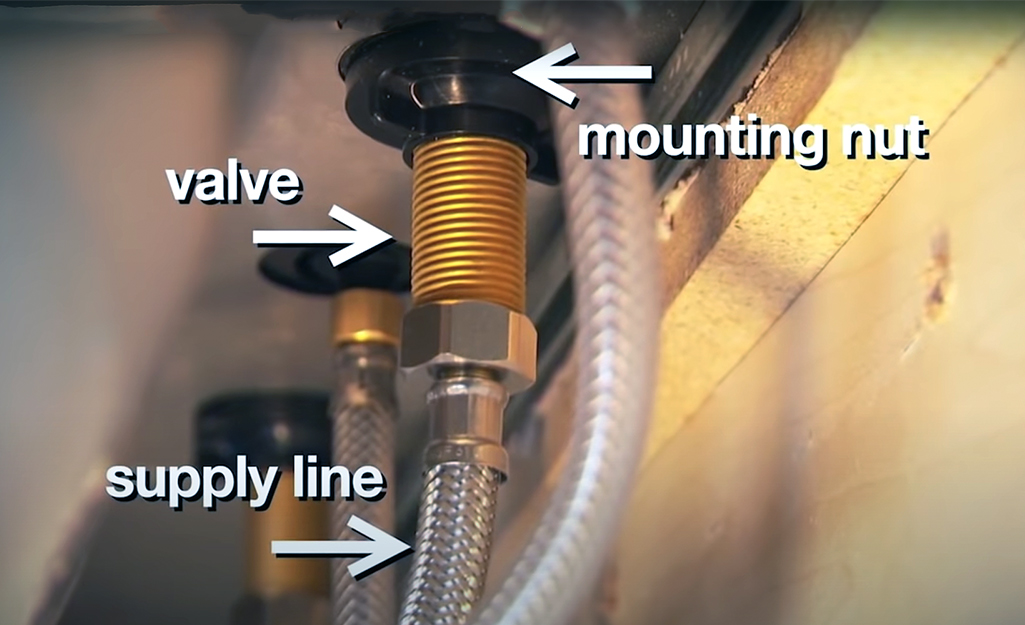
- Locate the Shut-Off Valves: Under your kitchen sink, you should find two valves connected to the water supply lines that run to your current faucet. One is for hot water (usually on the left), and the other is for cold water (usually on the right).
- Turn Off the Valves: Turn the handles of both valves clockwise until they are firmly closed.
- Test: Turn on your old faucet to drain any remaining water in the lines and confirm that the water is indeed shut off. You shouldn’t get more than a trickle.
Step 2: Disconnecting the Old Faucet
Now, it’s time to remove the old fixture. This can sometimes be the trickiest part, especially if corrosion has set in.
- Place a Bucket: Position your bucket directly under the water supply lines and the faucet’s mounting area. This will catch any water that might still be in the pipes or the faucet itself.
- Disconnect Supply Lines: Using an adjustable wrench, carefully loosen the nuts connecting the flexible supply lines to the shut-off valves. Have a towel ready for any drips.
- Disconnect Sprayer Hose (if applicable): If your old faucet has a separate sprayer, locate its hose connection under the sink and disconnect it. This might involve a clip or a threaded fitting.
- Loosen Mounting Hardware: This is where the basin wrench shines. Look up under the sink where the faucet body attaches to the sink. You’ll find nuts or mounting brackets securing the faucet. Use your basin wrench to loosen and remove these. It might take some wiggling and patience. If they are very tight, a little penetrating oil might help.
- Remove the Old Faucet: Once all connections and mounting hardware are undone, gently pull the old faucet straight up and out of the sink holes. You may need to wiggle it a bit.
Step 3: Cleaning the Sink Surface
Before installing the new faucet, give the sink surface a good cleaning where the old faucet was. This ensures a clean and solid base for your new plumbing fixtures.
- Remove Old Sealant: Scrape away any old plumber’s putty or silicone sealant using a plastic scraper or putty knife. Be careful not to scratch your sink surface.
- Clean Thoroughly: Wipe down the area with a damp cloth and some all-purpose cleaner to remove any grime, mineral deposits, or residue. A clean surface is vital for a proper seal with your new faucet.
Step 4: Preparing the New Faucet
Your new faucet likely comes with some assembly required, or at least requires preparation for installation.
- Read the Manufacturer’s Instructions: Always refer to the specific instructions that came with your new faucet. They are tailored to your particular model and may have specific requirements.
- Apply Plumber’s Putty or Sealant: Most faucets require a seal at the base to prevent water from seeping under the sink.
- For Faucets with Integrated Gasket: If your faucet comes with a rubber or foam gasket, you might not need putty. Ensure the gasket is properly seated.
- For Faucets Without Integrated Gasket: Roll a rope of plumber’s putty into a snake-like shape (about 1/4 to 1/2 inch thick). Press this rope around the underside of the faucet base. Alternatively, you can apply a bead of silicone sealant around the edge. The putty will be squeezed out when you tighten the faucet, creating a watertight barrier.
Step 5: Installing the New Faucet
Now, the exciting part – putting in your new kitchen tap!
- Position the Faucet: Carefully guide the new faucet through the holes in your sink. Make sure it’s oriented correctly (spout facing forward, handles in the right position). If your faucet has a sprayer, make sure its hose can reach the sprayer hole.
- Secure from Below: Go back under the sink. Thread the mounting nuts or brackets onto the faucet shanks. Hand-tighten them first, ensuring the faucet is straight and centered on the sink.
- Tighten Mounting Hardware: Use your basin wrench to tighten these nuts. Tighten them evenly, alternating between nuts if there are multiple. Be firm, but don’t overtighten, as this can damage the sink or the faucet. A snug fit is key to a stable installation. Wipe away any excess plumber’s putty that squeezed out around the faucet base on the sink.
Step 6: Connecting the Water Supply Lines
This is where the new faucet plumbing comes to life.
- Connect Supply Lines to Faucet: If your faucet didn’t come with pre-attached supply lines, connect the new flexible supply lines to the hot and cold water inlets on the faucet shanks. Hand-tighten them, then use an adjustable wrench to give them an additional quarter to half turn. Be careful not to overtighten.
- Connect Supply Lines to Shut-Off Valves: Now, connect the other ends of the supply lines to the corresponding hot and cold water shut-off valves. Again, hand-tighten first, then snug them up with an adjustable wrench. If you’re using Teflon tape on the valve threads, wrap it clockwise around the threads a few times before connecting the supply line.
Step 7: Connecting the Sprayer Hose (if applicable)
If your new faucet has a pull-out or side sprayer, you’ll need to connect its hose.
- Attach Hose: Most sprayers have a specific connection point under the sink. Slide the hose onto the fitting and secure it with the provided clip or by tightening a threaded connection.
- Attach Weight: Many pull-out sprayers have a counterweight that helps retract the hose. Attach this weight to the hose at the position recommended in your faucet’s instructions. This ensures smooth operation of your new kitchen tap.
Step 8: Turning the Water Back On and Testing
The moment of truth!
- Slowly Open Valves: Gently turn the hot and cold water shut-off valves counter-clockwise to open them. Open them slowly at first.
- Check for Leaks: Immediately inspect all the connections you made under the sink: where the supply lines connect to the shut-off valves and where they connect to the faucet. Look and feel for any drips or moisture. If you see a leak, turn the water off again and tighten the connection slightly.
- Test the Faucet: Turn on your new kitchen faucet, starting with a low flow. Check both hot and cold water. Inspect again for any leaks at the base of the faucet and around all connections. Run the water for a minute or two to flush out any debris from the new plumbing.
Step 9: Final Touches and Cleanup
Your DIY faucet install is almost complete!
- Wipe Down: Dry up any residual water under the sink and around the faucet.
- Inspect Again: Do one final check for leaks after the water has been running for a few minutes.
- Dispose of Old Faucet: Properly dispose of your old faucet.
- Enjoy Your New Faucet! You’ve successfully upgraded your kitchen’s look and functionality.
Troubleshooting Common Issues
Even with careful work, you might encounter minor issues. Here’s how to address them:
Leaks Under the Sink
- Cause: Loose connections, faulty supply line washers, or insufficient plumber’s putty/sealant.
- Solution: Turn off the water. Gently tighten any leaking connections. If it persists, disconnect the supply line, check the washer inside the fitting, and re-seat or replace it. Ensure proper use of Teflon tape on threaded fittings. For leaks at the faucet base, you might need to slightly tighten the mounting nuts or reapply plumber’s putty/sealant.
Low Water Pressure
- Cause: Partially closed shut-off valves, debris in the aerator, or kinks in the supply lines.
- Solution: Ensure both shut-off valves are fully open. Unscrew the aerator (the little screen at the tip of the spout) and clean out any sediment. Check the new supply lines for any kinks or sharp bends that could restrict flow.
Dripping Faucet After Installation
- Cause: Debris trapped in the valve seat or a faulty cartridge within the new faucet.
- Solution: This is less common with new faucets but can happen. Try running water at full blast to dislodge debris. If it continues, consult your faucet’s manual. If the faucet is new, this might indicate a manufacturing defect, and you may need to contact the manufacturer or return it.
Factors to Consider When Choosing a New Faucet
Selecting the right faucet is as important as the installation itself. Consider these points for a successful kitchen faucet replacement:
Hole Configuration
- Single-Hole Faucets: These have the spout and handle(s) integrated into one unit, requiring only one hole in your sink or countertop.
- Double-Hole Faucets: Typically a faucet with a separate handle, needing two holes.
- Three-Hole Faucets: The most common configuration, with a faucet and two separate handles (hot and cold).
- Four-Hole Faucets: Often include a faucet, two handles, and a side sprayer or soap dispenser.
Measure the existing holes in your sink to ensure your new faucet matches. If you want to change the configuration (e.g., from a three-hole to a single-hole faucet), you might need a sink adapter plate.
Faucet Styles and Finishes
- Styles: From modern and sleek to traditional and classic, there’s a style to match any kitchen decor. Popular options include pull-down, pull-out, bridge, and gooseneck faucets.
- Finishes: Chrome, brushed nickel, stainless steel, oil-rubbed bronze, and matte black are common choices. Consider durability, ease of cleaning, and how the finish will complement your other kitchen fixtures.
Features to Look For
- Pull-Down or Pull-Out Sprayer: Offers greater flexibility and reach for cleaning.
- Touchless Activation: For ultimate convenience and hygiene.
- High Arc Spout: Provides more clearance for washing large pots and pans.
- Water Filtration: Some faucets include built-in water filters.
- Ceramic Disc Valves: These are highly durable and resistant to leaks compared to older compression or ball valves. They are a key component in modern kitchen faucet plumbing.
Maintenance Tips for Your New Faucet
To ensure your new faucet continues to function flawlessly and look great, follow these maintenance tips:
- Regular Cleaning: Wipe down your faucet regularly with a soft, damp cloth to prevent water spots and mineral buildup. Use mild soap if necessary. Avoid abrasive cleaners that can scratch the finish.
- Aerator Cleaning: Periodically unscrew the aerator at the spout tip and rinse it to remove any sediment or debris that could affect water flow.
- Check for Leaks: Pay attention to any new drips or signs of leaks around the faucet or under the sink. Address them promptly to prevent water damage.
- Supply Line Inspection: Every few years, inspect the flexible supply lines for any signs of wear, cracking, or bulging. Replace them if they show any damage to prevent a burst hose and potential water damage.
Frequently Asked Questions (FAQ)
Q: How long does it typically take to install a new kitchen faucet?
A: For an experienced DIYer, it can take 30 minutes to an hour. For a beginner, it might take 1-2 hours, especially if dealing with stubborn old fittings.
Q: Can I install a new faucet without shutting off the water?
A: It is strongly advised not to attempt faucet installation without shutting off the water supply. Doing so will result in a significant water mess and potential damage. Always locate and turn off the shut-off valves under the sink first.
Q: What is a basin wrench, and why do I need it for sink faucet installation?
A: A basin wrench is a specialized tool with a long shaft and a pivoting jaw designed to reach and loosen or tighten nuts in tight, awkward spaces, such as those found behind and above the sink where faucet mounting hardware is located. It makes the job of removing and installing a kitchen faucet significantly easier.
Q: Is plumber’s putty or silicone sealant better for sink faucet installation?
A: Both can work, but they have different applications. Plumber’s putty is a pliable compound that creates a flexible seal and is commonly used between the faucet base and the sink. Silicone sealant creates a more rigid, permanent waterproof seal. For most faucets, plumber’s putty is traditional and effective. Always check your faucet manufacturer’s recommendations.
Q: Do I need to replace my old supply lines when I install a new kitchen faucet?
A: It’s highly recommended. While sometimes the old supply lines might look fine, they can degrade over time. Replacing them with new ones when you do a kitchen faucet replacement ensures a secure, leak-free connection for your new faucet plumbing and adds peace of mind.
Q: What if my new faucet requires more or fewer holes than my sink has?
A: If your new faucet requires fewer holes than your sink provides (e.g., installing a single-hole faucet on a three-hole sink), you can purchase an adapter plate or deck plate to cover the unused holes. If your sink has fewer holes than your faucet requires, you may need to drill new holes, which is a more involved process best suited for experienced DIYers or professional plumbers, or consider a different faucet.
Q: My old faucet is very corroded. How can I loosen the nuts?
A: If the nuts are difficult to loosen, try applying a penetrating oil (like WD-40) to the threads. Let it sit for 15-30 minutes, then try again. You might need to use a wire brush to clean the threads before applying oil. Sometimes, a bit more leverage with the basin wrench or an adjustable wrench can help, but be careful not to strip the nuts or damage the sink.
By following these detailed steps and tips, you can confidently tackle your kitchen faucet replacement. This DIY faucet install will not only save you money but also give you the satisfaction of improving your own home. Enjoy your upgraded kitchen sink and the new functionality of your updated plumbing fixtures!