
Can you install kitchen cabinets yourself? Yes, with careful planning, the right tools, and a methodical approach, you can successfully install kitchen cabinets yourself. This comprehensive kitchen cabinet installation guide will walk you through every step, from initial preparation to the final touches of cabinet hardware installation.
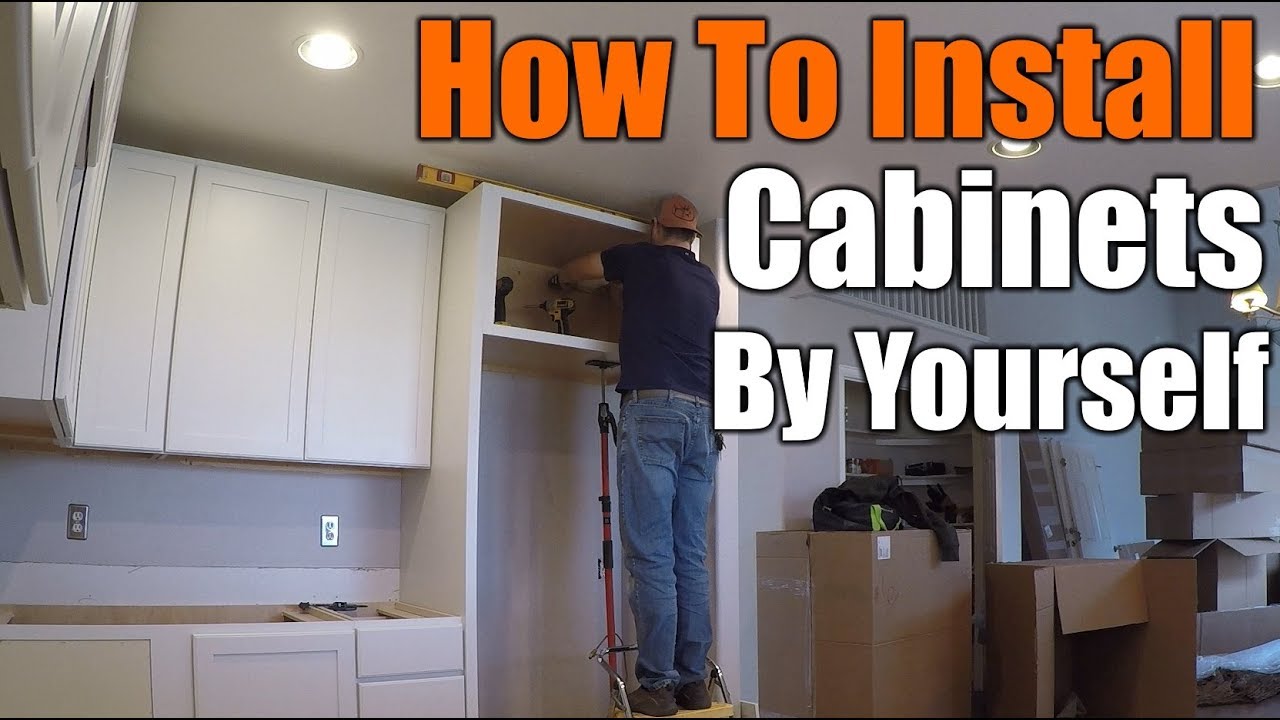
Image Source: i.ytimg.com
Getting Started: Planning Your Kitchen Cabinet Layout
Before you even pick up a hammer, the most crucial step is proper planning. This is where you’ll determine your kitchen cabinet placement and ensure everything flows logically in your kitchen.
Deciphering Your Kitchen Space
- Measure Everything: Measure the length and height of all walls where cabinets will be installed. Don’t forget to measure window and door openings, as well as the space for appliances like your refrigerator, oven, and dishwasher.
- Sketch Your Layout: Draw a detailed floor plan of your kitchen. Mark the locations of windows, doors, existing plumbing, electrical outlets, and any other fixed elements.
- Cabinet Placement Strategy: Decide on the placement of each cabinet. Consider workflow: where will you prep food, cook, and store dishes? Common layouts include L-shaped, U-shaped, and galley kitchens.
- Base vs. Wall Cabinets: Base cabinets sit on the floor and support countertops. Wall cabinets hang on the wall, typically above the base cabinets. Plan the height for your wall cabinets, keeping in mind standard countertop heights and desired clearances.
- Appliance Integration: Ensure your cabinet layout accommodates all your appliances. For example, a refrigerator cabinet might need specific dimensions.
Creating a Cut List and Shopping List
Once your layout is finalized, you’ll need to create a detailed list of the cabinets you require.
- Cabinet Styles: Choose between framed or frameless cabinets, and select your desired style (e.g., Shaker, raised panel).
- Cabinet Sizes: Based on your measurements and layout, determine the exact sizes of base cabinets, wall cabinets, and any specialty cabinets (e.g., corner cabinets, pantry cabinets).
- Hardware: Select cabinet doors, drawer fronts, hinges, drawer slides, and handles/knobs.
- Accessories: Think about any extras like toe kicks, crown molding, filler strips, and shelf supports.
Gathering Your Cabinet Installation Tools
Having the right cabinet installation tools will make the job significantly easier and ensure a professional finish.
Essential Tools for Cabinet Mounting
- Measuring Tape: A sturdy, accurate measuring tape is indispensable.
- Level: A long level (4-foot or 6-foot) is crucial for ensuring cabinets are plumb and level.
- Stud Finder: To locate wall studs for secure mounting.
- Pencil: For marking.
- Drill/Driver: With various drill bits and driver bits. Cordless is highly recommended.
- Circular Saw or Miter Saw: For cutting filler strips, toe kicks, or custom shelving if needed.
- Jigsaw: Useful for making cuts around pipes or electrical boxes.
- Clamps: Various types of clamps (bar clamps, pipe clamps) will be helpful for holding cabinets in place while securing them.
- Hammer: For tapping in shims and driving nails (though screws are preferred for cabinet mounting).
- Pry Bar: For minor adjustments.
- Putty Knife: For filling nail holes.
- Safety Glasses: Always wear safety glasses when working with power tools.
- Work Gloves: To protect your hands.
- Safety Harness (Optional): If you’re working with heavy wall cabinets and feel it’s necessary.
Specialized Cabinet Installation Aids
- Cabinet Lifting System or Suspenders: For easily and safely lifting wall cabinets into place.
- Cabinet Jack: Similar to a lifting system, these can be very helpful for supporting base cabinets.
- Speed Square: For marking 90-degree angles.
- Chalk Line: For marking long, straight lines on walls.
- Shim Spacers: Small wooden wedges for fine-tuning the leveling and plumbness of cabinets.
- Pilot Hole Drill Bits: To prevent wood splitting when driving screws.
Preparing Your Kitchen Walls for Cabinet Installation
Proper wall preparation is key to a successful and secure cabinet installation.
Kitchen Cabinet Framing and Wall Prep
- Check for Plumb and Level Walls: Use your level to check if your walls are plumb (vertically straight) and if your floors are level. Any significant discrepancies will need to be addressed with shims.
- Locate Wall Studs: Use your stud finder to mark the location of every wall stud within the cabinet installation area. Cabinets must be anchored securely to these studs. Mark the center of each stud with a pencil at various heights.
- Reinforce Studs (If Necessary): In some older homes, wall studs might not be ideally spaced for cabinet mounting. You may need to add blocking or reinforce existing studs. This is crucial for securing kitchen cabinets properly.
- Clear Obstructions: Ensure all pipes, electrical boxes, and other obstructions are accounted for and are either in the correct location or can be safely worked around.
- Clean the Walls: Dust and debris can interfere with adhesion or create uneven surfaces. Give the walls a good wipe-down.
Step-by-Step: Installing Your Kitchen Cabinets
This is the core of your DIY cabinet mounting project. Follow these steps carefully for a professional result.
Step 1: Marking Cabinet Lines
Accurate layout lines are your guide for installing cabinets straight and level.
- Establish a Starting Point: Typically, you’ll start with a corner base cabinet or a significant wall cabinet.
- Draw a Level Line for Base Cabinets: Use your level to draw a horizontal line on the wall at the exact height where the top of your base cabinets will sit. This is usually 34.5 inches from the floor, assuming standard 1.5-inch toe kicks and 36-inch finished countertop height. Double-check this measurement based on your planned countertop thickness.
- Draw Plumb Lines for Cabinet Sides: From your level line, draw vertical plumb lines at the edges of where each cabinet will be placed. This creates a grid for your installation.
Step 2: Installing Base Cabinets
Base cabinets are installed first as they provide a stable base for the countertops and wall cabinets.
- Assemble Cabinets (If Necessary): If your cabinets came flat-packed, follow the manufacturer’s instructions for cabinet assembly. Ensure all joints are square and tight.
- Position the First Cabinet: Place your first base cabinet against the wall, aligning its top edge with your level line and its sides with your plumb lines.
- Shim for Level and Plumb: Insert shims between the back of the cabinet and the wall, and at the bottom if needed, to ensure the cabinet is perfectly level side-to-side and front-to-back, and plumb vertically.
- Secure the Cabinet: Once the cabinet is shimmed correctly, drive screws through the cabinet’s back into the wall studs. Use at least two screws per stud, ensuring they go deep into the stud. Pre-drilling pilot holes can help prevent the wood from splitting.
- Connect Adjacent Base Cabinets: Position the next base cabinet next to the first. Shim it level and plumb. Clamp the two cabinets together at the face frames. Drill pilot holes through the face frames and drive cabinet connecting screws to join them securely. Continue this process for all base cabinets.
- Checking Your Work: As you install each base cabinet, constantly check that it is level, plumb, and square with its neighbors.
Step 3: Installing Wall Cabinets
Wall cabinets are often the trickiest part due to their weight and height.
- Determine Wall Cabinet Height: Mark a level line on the wall for the bottom of your wall cabinets. The standard clearance between the countertop and the bottom of wall cabinets is 18 inches.
- Use a Support System: A cabinet lifting system or sturdy temporary supports (like stacked lumber or adjustable cabinet jacks) are highly recommended to hold the cabinets in place while you secure them.
- Position the First Wall Cabinet: Lift the first wall cabinet into position, aligning its bottom edge with your marked line and its sides with your plumb lines.
- Shim and Level: Use shims at the back of the cabinet to ensure it is plumb and flush with the wall. Check for level side-to-side.
- Secure the Cabinet: Drive screws through the cabinet’s back (ideally through the reinforced hanging rail or stile) into the wall studs. Use at least two screws per stud. For heavier cabinets or if you’re unsure about stud placement, consider using robust wall anchors designed for heavy loads.
- Connecting Adjacent Wall Cabinets: Place the next wall cabinet next to the first. Shim, level, and secure it to the wall studs. Then, clamp the two cabinets together at their face frames. Drill pilot holes and drive cabinet connecting screws through the face frames to join them.
- Cabinet Hanging Tips:
- Always have a helper when lifting and positioning wall cabinets.
- Start in a corner if possible.
- Ensure your support system is stable and at the correct height.
- Check that cabinets are level and plumb before driving any screws.
- Over-tightening screws can strip the wood or damage the cabinet.
Step 4: Installing Specialty Cabinets and Fillers
This includes corner cabinets, pantry cabinets, and any filler pieces needed to bridge gaps.
- Corner Cabinets: These often require specific installation methods. Refer to the manufacturer’s instructions, as they can be tricky to align and secure properly.
- Filler Strips: If there are gaps between cabinets and walls or between cabinets themselves, you’ll need filler strips. Cut these to size with your saw and attach them to the cabinets or the wall with screws.
- Toe Kick: Install the toe kick pieces at the bottom of your base cabinets, often using small nails or screws.
Step 5: Checking Your Work and Making Adjustments
Once all cabinets are installed, take a step back and review.
- Level and Plumb Check: Use your level on every cabinet, in every direction.
- Alignment: Ensure cabinet doors and drawer fronts align properly.
- Gaps: Look for any unwanted gaps. These can sometimes be hidden with caulk or filler if minor.
- Doors and Drawers: Open and close all doors and drawers to ensure they function smoothly. Adjust hinges if necessary.
Step 6: Cabinet Hardware Installation
This is the finishing touch that makes your cabinets functional and stylish.
- Install Hinges and Drawer Slides: If not already installed during cabinet assembly, now is the time to attach hinges to doors and drawer slides to cabinets and drawers. Follow the manufacturer’s directions precisely for alignment.
- Attach Handles and Knobs: Measure and mark the desired placement for your handles or knobs. Drill pilot holes and attach them with the provided screws. For consistency, use a template for drilling if you have many to install.
Maintaining Levelness: The Art of Leveling Kitchen Cabinets
Leveling kitchen cabinets is paramount for both aesthetics and functionality. A dropped cabinet door or a wobbly countertop is a clear sign of poor leveling.
Techniques for Perfect Leveling
- Shims are Your Friends: As mentioned throughout the installation process, shims are your primary tool for leveling kitchen cabinets. They are thin pieces of wood that can be inserted between the cabinet and the wall or floor to make minute adjustments.
- Build from the Level Line: Always start by establishing accurate level and plumb lines on your walls. This provides a visual reference to work from.
- Check All Planes: Don’t just check if a cabinet is level side-to-side. Ensure it’s also level front-to-back and plumb vertically.
- Use Long Levels: A shorter level can be fooled by slight imperfections in the cabinet itself. A longer level will give you a more accurate reading.
- Shim Behind Face Frames (Carefully): While shimming behind the cabinet box is standard, sometimes you might need to shim behind the face frame for precise alignment. Be careful not to create a gap that the face frame doesn’t adequately cover.
- Interlocking Cabinets: When connecting cabinets, ensure they are perfectly level and plumb with each other before screwing them together. This prevents one cabinet from pulling the other out of alignment.
Securing Your Cabinets: Ensuring Long-Term Stability
Securing kitchen cabinets is not just about making them look good; it’s about ensuring they remain safely attached to your home for years to come.
Methods for Robust Cabinet Mounting
- Into Wall Studs: This is the most critical method. Always aim to drive screws directly into the center of wall studs.
- Cabinet Screws: Use robust cabinet screws that are long enough to penetrate the cabinet box and securely engage with the wall stud (typically 2.5 to 3 inches long).
- Appropriate Fasteners: If you cannot hit a stud, use heavy-duty drywall anchors specifically designed for cabinets or significant weight. Toggle bolts or screw-in anchors can work, but always check their weight rating.
- Reinforced Hanging Rails: Many cabinets have a reinforced hanging rail at the top and bottom of the back panel. These are ideal places to drive screws for wall cabinets.
- Connecting Cabinets: Use cabinet connecting screws or bolts that pass through the face frames of adjacent cabinets. This distributes the load and creates a stronger, unified cabinet bank.
- Weight Distribution: Consider the weight of the items you’ll store in the cabinets. Overloading cabinets can stress the mounting points.
Frequently Asked Questions (FAQ)
Q1: How far apart should kitchen cabinets be?
The standard clearance between countertops and wall cabinets is 18 inches. This provides ample working space and prevents bumping your head. For base cabinets, the standard countertop height is 36 inches from the floor.
Q2: Can I install cabinets on plaster walls?
Installing cabinets on plaster walls can be more challenging than drywall. Plaster can be brittle. It’s crucial to locate studs accurately and use appropriate fasteners. If the plaster is in poor condition, you may need to reinforce the wall or consider adding a layer of drywall before cabinet installation.
Q3: What kind of screws should I use to hang cabinets?
Use high-quality wood screws specifically designed for cabinet installation, often called cabinet mounting screws or cabinet joining screws. They are typically 2.5 to 3 inches long and made of hardened steel. Avoid drywall screws, as they are not designed for the shear and pull-out forces involved.
Q4: How do I connect two base cabinets together?
After positioning and leveling adjacent base cabinets, clamp their face frames tightly together. Then, drill pilot holes through the face frames and drive cabinet connecting screws (often 1.5 to 2 inches long) to join them. Use at least two screws evenly spaced along the joint.
Q5: Do I need to install cabinets before or after flooring?
Generally, it’s easier to install cabinets before installing new flooring. Base cabinets rest on the finished floor. If you install them first, you’ll need to account for the thickness of the new flooring and potentially shim cabinets later. However, if you have existing flooring that will remain, install cabinets directly on top of it.
Q6: What if my walls are not straight?
Irregular walls are common. You’ll use shims liberally behind the cabinets to fill any gaps and ensure the cabinets are plumb and level. For significant wall bowing, you might need to install furring strips (thin strips of wood) to create a straighter surface to attach the cabinets to.
By following these detailed steps and employing the right techniques, you can confidently tackle your kitchen cabinet installation project and achieve a beautiful, functional result.