
Thinking about replacing your kitchen faucet? You’ve come to the right place! Installing a new Delta kitchen faucet might seem daunting, but with a little preparation and a clear guide, you can successfully install your Delta kitchen faucet yourself. This comprehensive guide will walk you through every step, from gathering your tools to enjoying your brand-new faucet.
Can you install a Delta kitchen faucet without a plumber? Yes, absolutely! Many homeowners successfully install their Delta kitchen faucets with basic tools and this detailed guide. Who is this guide for? Anyone looking to upgrade their kitchen sink with a stylish and functional Delta faucet.
Let’s get started on your DIY faucet installation journey!
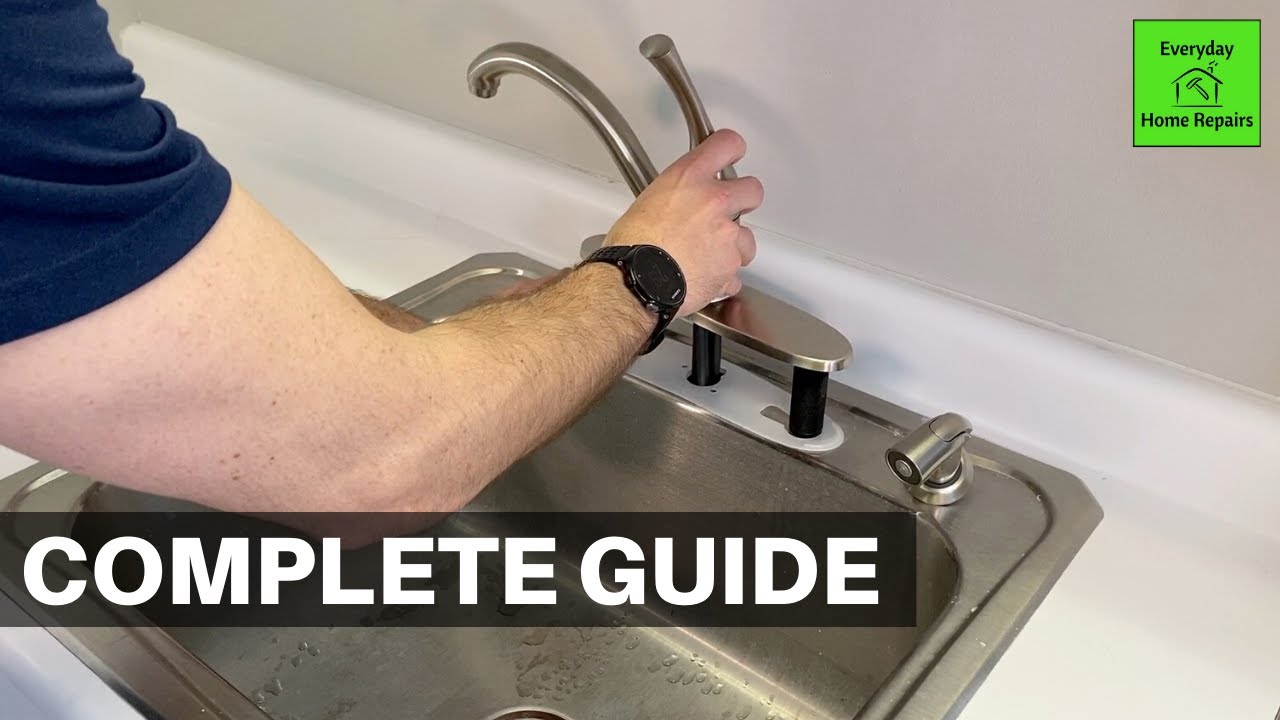
Image Source: i.ytimg.com
Before You Begin: Essential Preparations
A smooth installation starts with good preparation. Before you even think about removing your old faucet, take some time to gather everything you’ll need.
Tools and Materials You’ll Need
Having the right tools makes the job much easier and faster. Here’s a list of what you should have on hand:
- New Delta Kitchen Faucet: Of course! Ensure you have all the parts that came with it.
- Adjustable Wrenches (Two): One for holding and one for turning.
- Basin Wrench: This specialized tool is essential for reaching nuts in tight spaces under the sink.
- Bucket or Towels: To catch any residual water from the old pipes.
- Plumber’s Putty: A pliable, dough-like substance used to create a watertight seal around the base of the faucet.
- Thread Sealant Tape (also known as Teflon tape): Used on threaded pipe connections to prevent leaks.
- Screwdrivers (Phillips and Flathead): For various screws that may be present.
- Safety Glasses: Protect your eyes from debris and drips.
- Work Gloves: For a better grip and to protect your hands.
- Flashlight or Headlamp: It gets dark under the sink!
- Rags or Old Towels: For cleaning up spills and drying parts.
- Utility Knife or Putty Knife: To scrape away old plumber’s putty.
- Optional: Penetrating Oil: If nuts and bolts are stubborn and corroded.
Gathering Your New Faucet Parts
Open the box for your new Delta faucet and carefully lay out all the components. Check the instruction manual that came with your specific faucet model. This manual will show you how to assemble faucet parts and is your ultimate guide. Familiarize yourself with each piece: the faucet body, handles (if separate), mounting hardware, and water supply lines.
Turning Off the Water Supply
This is a critical step for safety and to prevent a messy flood!
- Locate Shut-Off Valves: Look under your sink for two valves connected to the water supply lines. One is for hot water, and the other is for cold water.
- Turn Off the Valves: Turn both valves clockwise until they are completely closed.
- Test: Turn on your old faucet to ensure the water is indeed shut off. Let any remaining water drain out.
Removing Your Old Kitchen Faucet
Now that the water is off, it’s time to say goodbye to your old faucet.
Step 1: Disconnect the Water Supply Lines
- Place a bucket or some old towels under the supply line connections to catch any leftover water.
- Using an adjustable wrench, loosen the nuts that connect the water supply lines to the shut-off valves. Unscrew them completely.
- Next, you’ll need to disconnect the supply lines from the old faucet itself. This is often where the basin wrench comes in handy.
Step 2: Detach the Faucet Body
- Look under the sink at the base of the faucet. You’ll find mounting nuts or brackets holding the faucet in place.
- Use your basin wrench or an adjustable wrench to loosen and remove these nuts. This can be the trickiest part due to the tight space.
- Once the nuts are off, the old faucet should be loose.
Step 3: Remove the Old Faucet
- From above the sink, carefully lift the old faucet out of the mounting holes.
- If there’s a separate sprayer, disconnect its hose from the faucet body and then lift it out as well.
- Clean the sink surface where the old faucet was mounted. Use your utility knife or putty knife to scrape away any old plumber’s putty or sealant.
Installing Your New Delta Kitchen Faucet
With the old faucet gone and the area cleaned, you’re ready to mount the faucet.
Step 1: Prepare the New Faucet for Installation
- Refer to your Delta faucet’s instruction manual.
- If your faucet has a deck plate (also called a escutcheon), install it now.
- Some faucets require you to assemble faucet parts before mounting. This might include attaching the faucet body to the handles or threading in components.
Step 2: Apply Plumber’s Putty
- Take a portion of plumber’s putty and roll it into a rope, about the thickness of a pencil.
- Carefully apply this rope of putty around the underside of the faucet base or deck plate that will rest on the sink surface. This creates a seal to prevent water from seeping underneath.
Step 3: Mount the Faucet
- Carefully lower the new faucet into the mounting holes on your sink. Ensure it’s positioned correctly.
- From underneath the sink, place any included gaskets or washers onto the threaded shanks of the faucet.
- Thread on the mounting nuts or brackets provided with your Delta faucet. Hand-tighten them first.
Step 4: Secure the Faucet
- Use your basin wrench and adjustable wrench to tighten the mounting nuts. Tighten them evenly, alternating between nuts if there are multiple.
- Ensure the faucet is straight and doesn’t wobble. Don’t overtighten, as this can damage the sink or the faucet.
Step 5: Connect the Water Supply Lines
This is where you connect water lines to your new faucet.
- Your new Delta faucet likely came with its own flexible water supply lines, or you may need to purchase new ones. It’s generally recommended to use new supply lines when installing a new faucet.
- Apply thread sealant tape (Teflon tape) to the threads of the shut-off valves. Wrap the tape clockwise around the threads at least 3-4 times.
- Attach one end of the hot water supply line to the hot water shut-off valve. Hand-tighten the connection, then use an adjustable wrench to give it about a quarter turn more.
- Do the same for the cold water supply line and the cold water shut-off valve.
- Now, connect water lines to the corresponding inlets on your new faucet. Again, hand-tighten first, then use a wrench for a snug fit. Be careful not to overtighten.
Step 6: Attach the Sprayer Hose (if applicable)
If your faucet has a pull-down or pull-out sprayer, you’ll need to attach the sprayer hose.
- Locate the connection point for the sprayer hose under the sink. This is usually a specific fitting.
- Connect the sprayer hose to this fitting. Most Delta faucets have a quick-connect system for the sprayer hose, which makes this step very straightforward. Ensure it clicks securely into place.
- Attach the hose weight to the sprayer hose as per your faucet’s instructions. This weight helps the sprayer retract properly.
Step 7: Install the Faucet Handles (if separate)
If your faucet has separate handles, you’ll need to install faucet handles.
- Slide the handles onto the faucet stems.
- Secure the handles with the provided set screws. These are often located on the underside or back of the handle. Tighten them with an Allen wrench or screwdriver.
Testing for Leaks and Finishing Up
You’re almost there! Now it’s time to test your work.
Step 1: Turn the Water Back On
- Slowly turn both the hot and cold water shut-off valves counter-clockwise to restore water flow.
Step 2: Check for Leaks
- Turn on your new Delta faucet and let the water run for a minute or two.
- Carefully inspect all the connections under the sink: at the shut-off valves and where the supply lines connect to the faucet. Look for any drips or signs of moisture.
- If you see a leak, try tightening the connection slightly (about an eighth of a turn). If the leak persists, you may need to turn off the water again, disconnect the line, reapply thread sealant tape, and reconnect.
- Check the base of the faucet on the sink surface for any leaks around the plumber’s putty seal.
Step 3: Flush the Faucet
- With the water running, operate the faucet handle and the sprayer a few times to flush out any air or debris that might be in the lines.
- Run both hot and cold water to ensure they are working correctly.
Step 4: Clean Up
- Wipe down the faucet and the sink area.
- Remove any excess plumber’s putty that might have squeezed out from under the faucet base.
- Gather your tools and store them.
Frequently Asked Questions (FAQ)
What is the best way to seal a faucet base?
Plumber’s putty is the most common and effective sealant for the faucet base. Roll it into a rope and place it around the underside of the faucet or deck plate that contacts the sink. This creates a watertight seal. Ensure you clean away any excess putty that squeezes out after the faucet is tightened.
Can I reuse my old water supply lines?
While it might be possible, it’s highly recommended to replace your water supply lines when installing a new faucet. Old lines can become brittle, corroded, or develop unseen weaknesses, leading to leaks. New lines are inexpensive and provide peace of mind.
How do I know if I need a basin wrench?
A basin wrench is specifically designed to reach and tighten or loosen nuts in the tight, awkward spaces behind and under a sink where a regular wrench cannot fit. If you’re replacing a kitchen faucet or working on any plumbing fixture where access is limited, a basin wrench is almost always essential.
How much plumber’s putty do I need?
You don’t need a lot. You just need enough to create a continuous rope around the base of the faucet or deck plate. A piece about the thickness of your finger and long enough to go around the perimeter is usually sufficient. It’s better to have a little too much and trim it than not enough.
How tight should I make the water line connections?
Connections should be snug but not overtightened. Hand-tighten the fittings first, then use an adjustable wrench to turn them about a quarter to a half turn further. Overtightening can strip the threads or crack the fittings, leading to leaks.
What if my new faucet doesn’t come with supply lines?
Most modern faucets do include integrated or separate flexible water supply lines. However, if yours doesn’t, you’ll need to purchase them separately. Make sure to get the correct length and connection sizes for your shut-off valves and your faucet inlets. Standard sizes are typically 3/8-inch compression for shut-off valves.
How do I remove a stuck faucet nut?
If a nut is corroded and won’t budge, try applying a penetrating oil (like WD-40) and let it sit for about 15-30 minutes. Then, try again with your basin wrench. If it’s still stuck, you may need to use a pipe wrench or, as a last resort, a hacksaw blade to carefully cut the nut off without damaging the sink or the faucet shanks.
How do I attach the sprayer hose correctly?
Most Delta faucets use a quick-connect system for the sprayer hose. You’ll usually push the hose end onto a specific fitting until it clicks into place. Always refer to your specific faucet model’s manual for the exact procedure and to ensure you attach the hose weight properly.
By following these detailed steps, you can confidently install your Delta kitchen faucet and enjoy a beautiful, functional upgrade to your kitchen. Happy installing!