
So, you’re wondering, “How much does a new kitchen countertop cost?” The price for a new kitchen countertop can range from $200 for basic laminate to over $10,000 for high-end natural stone, with the average kitchen countertop price falling somewhere in the middle, depending heavily on the material, size, and complexity of the installation. This guide will help you figure out the cost of new countertops for your home and create a realistic budget.
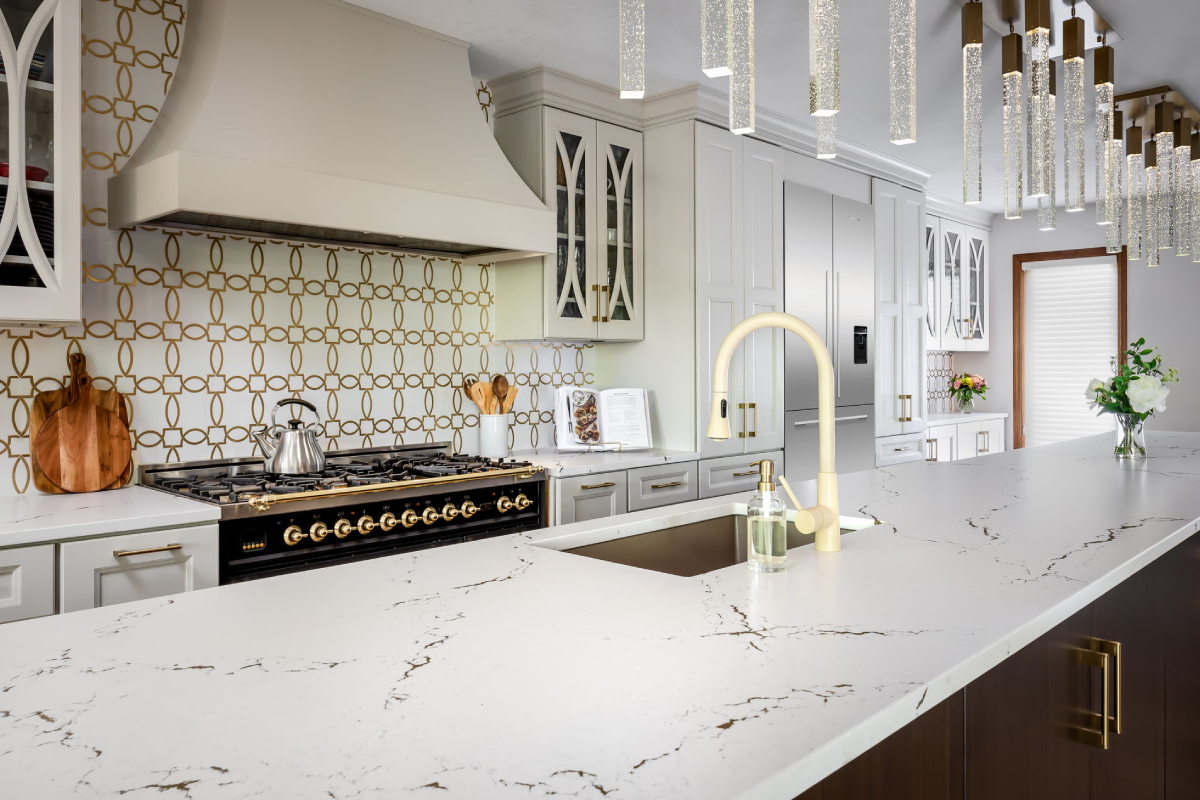
Image Source: karinrossdesigns.com
Deciphering the Price Tag: Factors Influencing Your Countertop Investment
The cost of new countertops is not a one-size-fits-all answer. Several key elements contribute to the final price, making it essential to break them down. We’ll explore these factors in detail to help you get an accurate new kitchen counter estimate.
Material Matters: The Heart of the Cost
The material you choose for your kitchen countertop is the single biggest driver of its price. From budget-friendly laminates to luxurious natural stones, each option brings a different aesthetic, durability, and price point to your kitchen.
Laminate Countertop Cost: The Budget-Friendly Choice
Laminate countertops are often the most affordable option, making them a popular choice for those on a tighter budget. They are made from layers of particleboard or MDF covered with a decorative laminate sheet.
- Pros: Inexpensive, wide variety of colors and patterns, relatively easy to clean.
- Cons: Prone to scratches, heat damage, and moisture, difficult to repair if damaged.
- Cost Range: Laminate countertop cost typically ranges from $20 to $50 per square foot, installed. For a standard 30-square-foot kitchen, this could mean $600 to $1,500 for the countertops themselves, plus installation.
Butcher Block Countertop Prices: Natural Warmth and Workability
Butcher block countertops offer a warm, natural look and provide a functional surface for food preparation. They are typically made from strips of hardwood glued together.
- Pros: Beautiful natural look, can be sanded and refinished, good for food prep, can be a DIY project.
- Cons: Requires regular sealing and maintenance, susceptible to stains, scratches, and water damage if not properly cared for.
- Butcher Block Countertop Prices: Prices vary based on the type of wood. Maple and beech are generally more affordable, while exotic hardwoods like walnut or teak will be pricier. Expect to pay between $30 to $75 per square foot, installed. A 30-square-foot kitchen could cost between $900 to $2,250.
Granite Countertop Prices: Timeless Beauty and Durability
Granite is a natural stone that offers exceptional durability and a unique, beautiful appearance. No two slabs are exactly alike, meaning your kitchen will have a truly custom look.
- Pros: Very durable, heat resistant, scratch resistant, adds significant resale value to your home, easy to clean.
- Cons: Porous (requires sealing), can be expensive, heavy (may require cabinet reinforcement), can chip or crack if a heavy object is dropped on an edge.
- Granite Countertop Prices: Granite countertop prices vary widely based on the color, pattern, and origin of the stone.
- Basic colors (e.g., speckled grays and browns): $40 – $60 per square foot, installed.
- Mid-range colors (e.g., more unique patterns): $60 – $80 per square foot, installed.
- High-end or exotic colors: $80 – $150+ per square foot, installed.
For a 30-square-foot kitchen, basic granite could cost between $1,200 and $1,800, while more elaborate options could reach $4,500 or more.
Quartz Countertop Cost: Engineered for Performance
Quartz countertops are engineered from natural quartz crystals mixed with resins and pigments. This composition makes them incredibly durable and low-maintenance.
- Pros: Extremely durable, non-porous (stain and bacteria resistant), consistent color and pattern, low maintenance, doesn’t require sealing.
- Cons: Can be expensive, can be damaged by extreme heat, can be heavy.
- Quartz Countertop Cost: Quartz countertop cost is generally comparable to mid-range to high-end granite. Expect prices to range from $50 to $120 per square foot, installed. For a 30-square-foot kitchen, this translates to $1,500 to $3,600.
Marble Countertop Cost: The Epitome of Luxury
Marble is a natural metamorphic rock known for its elegant veining and luxurious appeal. It’s a classic choice for those seeking a high-end look.
- Pros: Stunning, unique beauty, naturally cool surface (good for baking).
- Cons: Very porous (stains easily), soft (scratches and etches easily), requires frequent sealing and careful maintenance, can be very expensive.
- Marble Countertop Cost: Marble countertop cost is typically on the higher end. Prices can range from $70 to $150+ per square foot, installed. For a 30-square-foot kitchen, you could be looking at $2,100 to $4,500 or more.
Other Popular Material Options
Beyond the most common choices, several other materials offer unique benefits and price points:
- Solid Surface (e.g., Corian): A composite material made from acrylic polymers and alumina trihydrate.
- Pros: Non-porous, seamless appearance, repairable, wide color range.
- Cons: Can scratch and scorch, less premium feel than natural stone.
- Cost: $40 – $70 per square foot, installed.
- Soapstone: A natural stone known for its velvety feel and resistance to stains and heat.
- Pros: Non-porous, heat resistant, develops a natural patina over time, low maintenance.
- Cons: Softer than granite (can scratch), limited color options, can be expensive.
- Cost: $60 – $100 per square foot, installed.
- Stainless Steel: A popular choice for modern and professional kitchens.
- Pros: Durable, heat resistant, hygienic, easy to clean.
- Cons: Can scratch and dent, shows fingerprints, can be noisy, can be expensive.
- Cost: $75 – $150 per square foot, installed.
- Concrete: Can be customized with colors and finishes, offering a modern, industrial look.
- Pros: Highly customizable, durable, heat resistant.
- Cons: Porous (requires sealing), can crack, heavy, can be expensive.
- Cost: $50 – $150 per square foot, installed.
- Recycled Glass: Made from crushed recycled glass embedded in a binder.
- Pros: Eco-friendly, unique aesthetic, durable.
- Cons: Can be expensive, some binders can be sensitive to heat.
- Cost: $75 – $125 per square foot, installed.
Measuring Up: Size and Complexity
The total square footage of your countertop project is a direct factor in the overall cost. However, the layout and any custom features can also add to the price.
- Square Footage: Most pricing is done per square foot. A larger kitchen naturally means more material and therefore a higher cost.
- Edge Profiles: Standard eased or square edges are usually included in the base price. More intricate edge profiles, like bullnose, ogee, or beveled edges, will add to the cost. These can add $10 to $30 per linear foot.
- Cutouts: The number and complexity of cutouts for sinks, cooktops, and faucets will affect the installation price. Precise cuts and polished edges for these openings add labor.
- Backsplashes: If you plan to extend your countertop material up the wall as a backsplash, this will increase the total square footage and material cost.
- Seams: The fewer seams you have, the better. However, in larger kitchens, seams are unavoidable. The skill and care taken to make seams nearly invisible can impact pricing.
Installation Expertise: The Countertop Installation Price
This is a crucial aspect of the total cost of new countertops. Professional installation ensures your countertops are fitted correctly, sealed properly, and look their best. The countertop installation price can vary significantly based on the installer’s experience, the complexity of the job, and your location.
- Labor Costs: This includes the time and expertise of the fabricators and installers. Highly skilled craftspeople may command higher rates.
- Site Preparation: If your existing countertops need to be removed and disposed of, or if your cabinets need reinforcement to support heavy stone, these services will add to the installation price.
- Template and Fabrication: Before installation, an installer will create a precise template of your kitchen. This is then used to cut and shape the countertop material. The precision of this process is vital.
- Delivery: The cost of transporting the heavy countertop slabs to your home is typically included in the installation fee.
Beyond the Surface: Hidden Costs and Considerations
While material and installation are the primary cost drivers, don’t forget these potential additions to your budget.
- Sink and Faucet: The cost of new sinks and faucets is separate from the countertop material itself.
- Demolition and Disposal: If you’re replacing old countertops, factor in the cost of removal and disposal of the old materials.
- Cabinet Reinforcement: Heavy materials like granite and marble may require your existing cabinets to be reinforced, adding to the cost.
- Sealing and Maintenance Products: Some materials require periodic sealing or specialized cleaning products.
Fathoming Your Budget: Steps to Realistic Planning
Creating a budget for your new kitchen countertops involves a few key steps to ensure you stay on track and get the best value for your investment.
Step 1: Measure Your Kitchen Space
Accurate measurements are the first step to getting an accurate new kitchen counter estimate.
- Measure Length and Width: Measure the length and width of all countertop areas in inches.
- Account for Backsplashes: If you’re including a backsplash made from the same material, measure its height and length.
- Note Cutouts: Mark the locations and dimensions of sink, cooktop, and any other necessary cutouts.
- Add for Edges: Measure the linear feet of countertop edges that will require finishing (e.g., the front edge, the edge against the wall, or an island overhang).
Example Measurement Breakdown:
| Area | Length (inches) | Width (inches) | Square Feet | Linear Feet (Edge) |
|---|---|---|---|---|
| Main Counter 1 | 120 | 25 | 25.0 | 10.0 |
| Main Counter 2 | 72 | 25 | 15.0 | 6.0 |
| Island | 96 | 36 | 24.0 | 8.0 |
| Backsplash (Main) | 192 | 4 | 6.4 | N/A |
| Total | 70.4 | 24.0 |
Note: For calculations, convert inches to feet by dividing by 12. For example, 120 inches / 12 = 10 feet.
Step 2: Research Material Costs
Once you have your measurements, you can start researching the cost of new countertops for the materials you’re interested in.
- Get Quotes: Contact local stone yards, fabricators, and big-box home improvement stores. Request quotes for your specific measurements and preferred materials.
- Compare Material Prices: Use the ranges provided earlier (e.g., granite countertop prices, quartz countertop cost) as a starting point. Remember that exotic colors or unique veining will always cost more.
- Factor in Fabrication and Installation: Ensure that quotes include the cost of fabrication (cutting, edging, polishing) and installation.
Step 3: Factor in Installation and Additional Costs
The countertop installation price can significantly impact your total.
- Ask About Included Services: Clarify what the countertop installation price includes. Does it cover demolition, sink installation, faucet hookups, or disposal of old materials?
- Get Separate Quotes for Add-ons: If you need cabinet reinforcement, new sink/faucet installation, or plumbing work, get separate quotes for these services.
- Contingency Fund: It’s wise to add a 10-20% contingency to your budget for unforeseen issues or upgrades you might decide on during the process.
Step 4: Create Your New Kitchen Counter Estimate
Compile all the information to create your overall estimate.
- Material Cost: (Square Footage) x (Price per Square Foot of Material)
- Fabrication & Installation: (This is often bundled with material cost per square foot, but confirm)
- Edge Upgrades: (Linear Feet) x (Cost per Linear Foot for Edge Profile)
- Sink/Faucet Costs: (Cost of chosen sink and faucet)
- Demolition/Disposal: (Estimated cost if applicable)
- Contingency: (Total of above costs) x 10-20%
Example New Kitchen Counter Estimate (for a 70.4 sq ft kitchen with basic granite):
| Item | Calculation | Estimated Cost |
|---|---|---|
| Granite Material | 70.4 sq ft x $50/sq ft | $3,520 |
| Fabrication & Installation | Included in material price (assumed) | $0 |
| Edge Profile (24 linear ft) | 24 ft x $15/ft (e.g., eased edge upgrade) | $360 |
| Sink Cutout | Included in fabrication price (assumed) | $0 |
| Demolition & Disposal | Estimate | $250 |
| Subtotal | $4,130 | |
| Contingency (15%) | $4,130 x 0.15 | $619.50 |
| Grand Total Estimate | $4,749.50 |
This example illustrates how a new kitchen counter estimate can break down.
Weighing Your Options: Material Comparison Table
To help you visualize the differences, here’s a table comparing some popular countertop materials based on cost, durability, and maintenance.
| Material | Average Cost per Sq Ft (Installed) | Durability | Maintenance | Aesthetics |
|---|---|---|---|---|
| Laminate | $20 – $50 | Low | Easy to clean | Wide variety of colors/patterns |
| Butcher Block | $30 – $75 | Moderate | Requires sealing | Warm, natural wood look |
| Granite | $40 – $150+ | High | Requires sealing | Unique natural patterns |
| Quartz | $50 – $120 | Very High | Low maintenance | Consistent color/pattern |
| Marble | $70 – $150+ | Moderate to Low | High maintenance | Elegant, luxurious veining |
| Solid Surface | $40 – $70 | Moderate | Easy to clean | Seamless, modern |
| Soapstone | $60 – $100 | High | Low maintenance | Soft, natural feel |
| Stainless Steel | $75 – $150 | Very High | Easy to clean | Modern, professional |
| Concrete | $50 – $150 | High | Requires sealing | Customizable, industrial |
| Recycled Glass | $75 – $125 | High | Low maintenance | Eco-friendly, unique sparkle |
Maximizing Value: Tips for Smart Countertop Shopping
Getting the best value for your new kitchen countertops involves more than just finding the lowest price.
Shop Around for the Best Deals
Don’t settle for the first quote you receive. Visit multiple suppliers and fabricators to compare pricing and product selection. Look for sales or promotions, especially during off-peak seasons.
Consider Less Common Colors or Patterns
If you have your heart set on granite or quartz, but your budget is tight, consider looking at less common colors or patterns. These often come at a lower price point than the most popular varieties, yet still offer the same quality and durability.
Opt for Standard Edge Profiles
As mentioned earlier, fancy edge profiles add to the cost. Sticking with simpler, standard edges can save you money without compromising the overall look.
Explore Remnants for Smaller Projects
If you only need a small section of countertop, like for a bathroom vanity or a small kitchen island, ask about remnants. These are leftover pieces from larger slab projects, and they are often sold at a discounted price.
DIY Installation (with Caution)
For very simple materials like laminate or even some butcher block, a skilled DIYer might be able to handle the installation. However, for natural stone or complex layouts, professional installation is highly recommended to avoid costly mistakes. If you choose to DIY, ensure you have the right tools and knowledge.
FAQs About Kitchen Countertop Costs
Here are some common questions people have when planning for new countertops.
Q1: What is the most affordable countertop material?
A: Laminate countertops are generally the most affordable option, with prices starting around $20 per square foot installed.
Q2: What is the best value countertop material?
A: Quartz is often considered a good value because it offers excellent durability, low maintenance, and a premium look at a price point comparable to mid-range granite.
Q3: Can I get a free countertop estimate?
A: Yes, most countertop suppliers and fabricators offer free estimates. It’s recommended to get at least three different estimates to compare pricing and services.
Q4: How much does it cost to remove old countertops?
A: The cost to remove old countertops typically ranges from $150 to $500, depending on the material, size of the kitchen, and whether disposal is included.
Q5: Do granite countertop prices include installation?
A: Most granite countertop prices are quoted as installed. However, always confirm this with your supplier to avoid hidden charges. The countertop installation price is usually bundled.
Q6: Is quartz significantly more expensive than granite?
A: The cost of quartz and granite can overlap significantly. Basic granite might be less expensive than some quartz options, while high-end granite can be more expensive than common quartz. It’s best to compare specific slabs and options.
Q7: What are the most durable countertop materials?
A: Quartz, granite, stainless steel, and soapstone are generally considered very durable materials.
Q8: How much does a new kitchen counter estimate typically include?
A: A comprehensive new kitchen counter estimate should include the cost of the material, fabrication (cutting, edge finishing), and installation. It may also include sink cutouts and standard edge profiles. Always clarify what’s included.
Q9: What is the average kitchen countertop price for a standard 10×10 kitchen?
A: For a standard 10×10 kitchen (assuming approximately 50-60 square feet of countertop), the average kitchen countertop price could range from $1,000 for laminate to $3,000-$6,000+ for granite or quartz. This is a broad estimate.
Q10: How do butcher block countertop prices compare to other materials?
A: Butcher block countertop prices fall in the mid-range, generally more expensive than laminate but often less expensive than granite or quartz, depending on the wood species.
Choosing new kitchen countertops is a significant investment that can transform your kitchen’s look and functionality. By carefully researching materials, getting multiple quotes, and planning your budget meticulously, you can find the perfect countertops to enhance your home for years to come.