
What is the standard kitchen counter height? A standard kitchen counter height typically measures 36 inches (91.4 cm) from the finished floor to the top of the countertop. This height is designed to be comfortable for a majority of adults for various kitchen tasks.
When designing or renovating a kitchen, the height of your countertops plays a crucial role in both functionality and comfort. Getting this measurement right can transform your kitchen from a space that causes strain to one that feels perfectly suited to your needs. Let’s delve into the specifics of kitchen counter dimensions and why they matter.
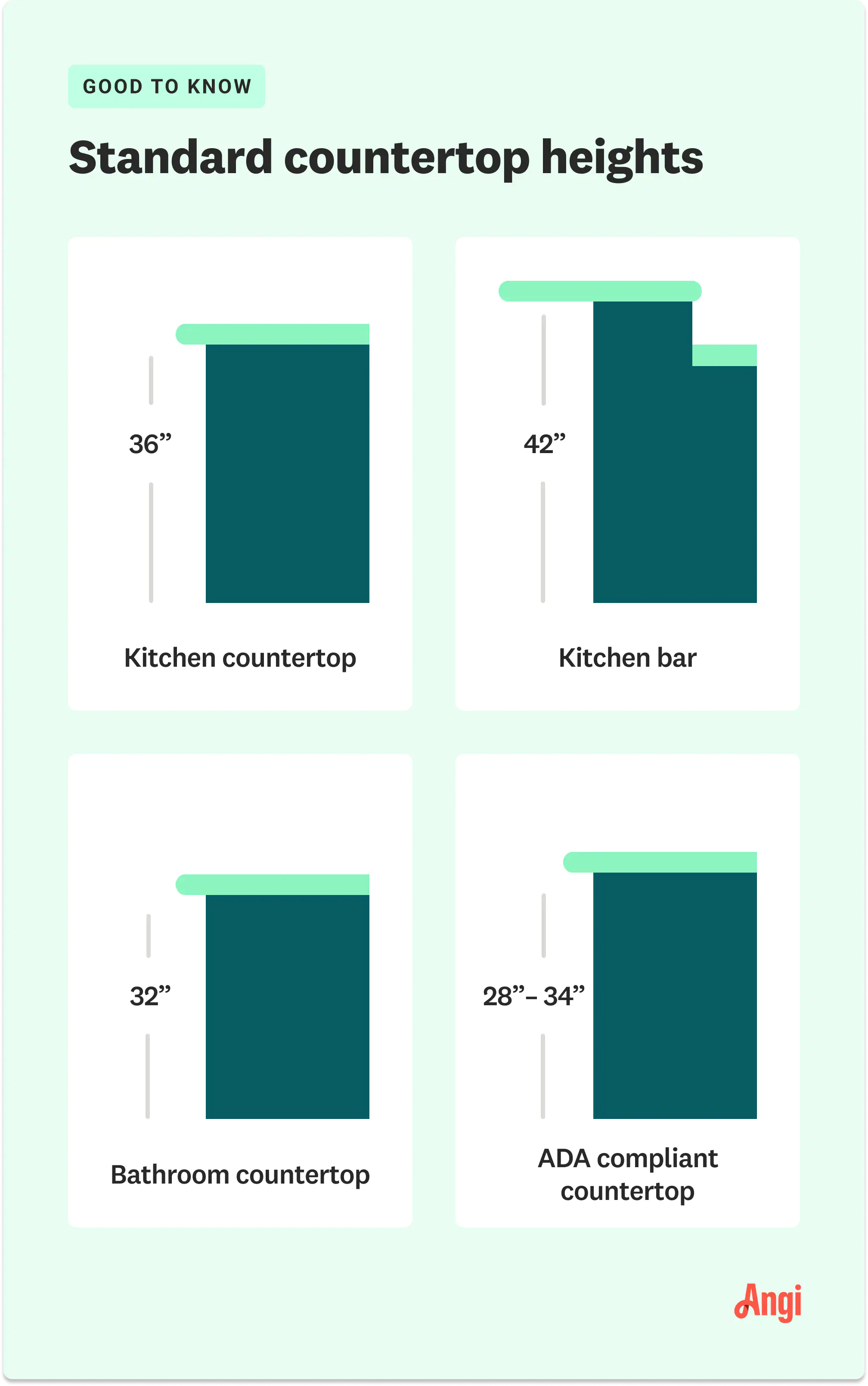
Image Source: media.angi.com
Fathoming the Standard Kitchen Counter Height
The standard kitchen counter height of 36 inches is not arbitrary. It’s a result of decades of design and ergonomic research aimed at creating a universally comfortable kitchen work surface height. This height allows most adults to stand and perform tasks like chopping vegetables, mixing ingredients, and washing dishes without excessive bending or reaching.
Key Kitchen Counter Dimensions
Beyond just height, other kitchen counter dimensions are important to consider:
- Average Counter Depth: The typical average counter depth is 25 inches (63.5 cm) for base cabinets. This depth provides ample space for appliances like microwaves and toasters, as well as room for prep work.
- Countertop Thickness: Countertops can vary in thickness, commonly ranging from 1 ¼ inches (3.2 cm) to 1 ½ inches (3.8 cm) for materials like granite or quartz. This thickness contributes to the overall standard cabinet height once installed.
- Clearance: Adequate clearance around countertops is vital. For walkways, a minimum of 36 inches (91.4 cm) is recommended, with 42-48 inches (106.7-121.9 cm) being ideal for high-traffic areas or around islands.
The Importance of Optimal Counter Height
Choosing the optimal counter height is about more than just following a trend; it’s about creating an ergonomic kitchen design. An ergonomic kitchen prioritizes the user’s comfort, safety, and efficiency. When your countertops are at the right height, you’ll notice:
- Reduced Back Strain: Less bending means less pressure on your spine.
- Improved Posture: Standing at a comfortable height encourages better posture.
- Increased Efficiency: Tasks are performed more smoothly and quickly when you’re not fighting an awkward workspace.
- Greater Safety: A stable and well-positioned surface reduces the risk of dropping items or sustaining injuries.
Comfort in the Kitchen: Achieving a Comfortable Kitchen Height
A comfortable kitchen height is subjective to some extent, as people have different body types. However, the 36-inch standard is a well-established compromise that works for many. When considering your own needs, think about:
- Your Own Height: Taller individuals might find slightly higher counters more comfortable, while shorter individuals might prefer slightly lower ones.
- The Primary User: If one person uses the kitchen significantly more than others, their comfort should be the primary consideration.
- Specific Tasks: Some tasks, like kneading dough, might be easier on a slightly lower surface, while tasks requiring overhead storage access might benefit from slightly higher surfaces.
Exploring Variations in Kitchen Counter Heights
While 36 inches is the standard, there are reasons why you might deviate from it. These variations often cater to specific needs or design preferences.
Kitchen Island Height Considerations
Kitchen island height can be the same as your perimeter countertops (36 inches), but it’s also common to see variations. Some kitchens feature islands with different zones for different activities:
- Dining/Seating Area: If your island incorporates a seating area for casual dining or entertaining, the countertop might be raised to bar height (42 inches or 106.7 cm) or counter height (36 inches). A breakfast bar often sits around 30-36 inches.
- Baking Stations: Some designers recommend a slightly lower section on an island, around 30-32 inches (76.2-81.3 cm), for tasks like baking that benefit from a surface closer to elbow height.
ADA Kitchen Counter Height: Accessibility for All
The Americans with Disabilities Act (ADA) provides guidelines to ensure kitchens are accessible to people with disabilities. For a ADA kitchen counter height, the recommended range is typically between 30 and 34 inches (76.2 to 86.4 cm) from the finished floor to the top of the counter.
Key ADA kitchen design principles include:
- Knee Clearance: Providing unobstructed knee space under sinks and countertops (at least 27 inches high, 19 inches deep, and 30 inches wide).
- Clear Floor Space: Ensuring a minimum clear floor space of 30 by 48 inches (76.2 by 121.9 cm) for wheelchair maneuverability.
- Reach Ranges: Designing controls and storage to be within accessible reach ranges.
These guidelines are crucial for creating a truly inclusive kitchen environment.
Factors Influencing Your Countertop Height Choice
Several factors can influence your decision when setting your kitchen counter height. It’s a balance between convention and personal requirement.
Standard Cabinet Height and its Role
The standard cabinet height for base cabinets is 34 ½ inches (87.6 cm). When a countertop of 1 ½ inches thickness is added, this brings the total standard kitchen counter height to 36 inches. Understanding this relationship helps in planning your kitchen layout and cabinet selections.
- Custom Cabinetry: If you opt for custom cabinets, you have more flexibility to adjust the base cabinet height to achieve your desired final countertop height.
- Stock Cabinets: With stock cabinets, you’re generally working with the 34 ½ inch standard base cabinet height, making countertop thickness a key variable for fine-tuning the final height.
Customizing for Comfort and Functionality
While the 36-inch standard is widely adopted, personalizing your kitchen can lead to significant improvements in comfort and efficiency.
Adjusting for Height
- Taller Individuals: If the primary cook is over 6 feet tall, they might find 37-38 inch (94-96.5 cm) countertops more comfortable. This can be achieved with a slightly taller base cabinet or a thicker countertop.
- Shorter Individuals: For those under 5’4”, a counter height of 34-35 inches (86.4-88.9 cm) might feel more natural. This can be achieved by using a shorter base cabinet or a thinner countertop material.
Task-Specific Work Surfaces
Some kitchens benefit from varied work surface heights. For instance:
- Baking Area: A dedicated baking zone, perhaps on a kitchen island, could be lowered to around 30 inches (76.2 cm) for easier kneading and mixing.
- Butchering Block: A thick, fixed butcher block section can be integrated at a height that suits the primary user for tasks like breaking down large cuts of meat.
Considering Flooring and Subflooring
The height of your finished floor also plays a role. Any changes in flooring thickness (e.g., tile over concrete versus hardwood) can subtly affect the final countertop height. Always measure from the finished floor.
The Average Counter Depth: More Than Just Surface Area
The average counter depth of 25 inches for base cabinets is also a critical dimension. It dictates not only how much workspace you have but also how much space you have in front of your cabinets.
Depth and Usability
- Workspace: A deeper counter (e.g., 30 inches) can provide a more expansive prep area, allowing you to keep appliances on the counter without encroaching on your workspace.
- Appliance Integration: Standard appliances like dishwashers are designed to fit within the 25-inch depth. If you choose deeper cabinets, you’ll need to account for appliance depths accordingly.
- Cabinet Access: Deeper cabinets can sometimes make reaching items stored in the back more difficult, though solutions like pull-out shelves can mitigate this.
Ergonomic Kitchen Design Principles
An ergonomic kitchen design focuses on making kitchen tasks as effortless and safe as possible. Beyond counter height, other considerations include:
- Cabinet Storage: Ensuring upper cabinets are within easy reach and lower cabinets have accessible pull-out shelves or drawers.
- Appliance Placement: Locating frequently used appliances (e.g., oven, microwave, dishwasher) in convenient proximity to work zones.
- Lighting: Adequate task lighting over work surfaces is essential for safety and comfort.
- Traffic Flow: Designing clear pathways to avoid collisions and allow multiple people to work in the kitchen simultaneously.
The Role of Kitchen Island Height in Ergonomics
The kitchen island height can also contribute to ergonomics. If the island serves as a primary prep area, its height should align with the user’s comfort. If it’s primarily for seating, the height should accommodate standard bar stools or counter stools.
Materials and Their Impact on Height
The material of your countertop can subtly influence the final height.
Countertop Thickness Variations
- Granite/Quartz: Typically 1 ¼” or 1 ½”.
- Marble: Often 1 ¼” or 1 ½”.
- Butcher Block: Can range from 1 ½” to 4″ or more.
- Laminate: Usually ¾” to 1 ½”.
- Concrete: Can be cast thicker, often 2″ or more.
These thicknesses, when combined with the base cabinet height, determine the overall standard kitchen counter height.
Planning Your Perfect Countertop Height
When planning your kitchen, consider these steps to ensure you achieve the ideal kitchen work surface height:
- Measure Yourself: Stand comfortably and place your hands as if you were chopping. The height from the floor to your elbow is a good starting point for an ergonomic work surface.
- Consider Your Primary Tasks: Are you a serious baker who needs to knead dough? Do you spend hours prepping vegetables? These tasks might inform whether you need a slightly lower or standard height.
- Involve All Users: If multiple people use the kitchen regularly, get their input on what feels comfortable.
- Think About Seating: If your island or peninsula will have seating, plan the height accordingly to accommodate standard stool heights.
- Consult Professionals: Kitchen designers and cabinet makers can offer valuable insights and ensure your choices are practical and meet building codes.
Example Height Calculations:
Let’s say you have standard 34 ½ inch base cabinets.
- To achieve the standard kitchen counter height of 36 inches, you’ll need a 1 ½ inch thick countertop.
- If you want a slightly lower counter at 34 inches for baking, and you have standard base cabinets, you’d need a very thin countertop (which might not be structurally sound for all materials) or you’d need to adjust the base cabinet height.
- If you’re using custom cabinets, you can specify a 32 ½ inch base cabinet and add a 1 ½ inch countertop for a total of 34 inches.
Frequently Asked Questions About Kitchen Counter Height
Here are some common questions about kitchen counter heights:
Q1: Can I make my kitchen counters taller than standard?
Yes, you can make your kitchen counters taller. Taller individuals might find counters at 37-38 inches more comfortable. This can be achieved by using taller base cabinets or selecting thicker countertop materials.
Q2: What is the standard kitchen cabinet height?
The standard cabinet height for base cabinets in the US is 34 ½ inches. When a typical 1 ½ inch countertop is added, this results in the standard 36-inch counter height.
Q3: Is there a difference between kitchen island height and perimeter counter height?
Not necessarily. Many kitchens feature islands at the same standard kitchen counter height of 36 inches. However, islands can also incorporate different heights for seating (bar height – 42 inches) or specialized work areas (e.g., lower baking stations).
Q4: What is the ADA kitchen counter height requirement?
The ADA recommends a kitchen counter height between 30 and 34 inches from the finished floor, with specific requirements for knee clearance and clear floor space to ensure accessibility.
Q5: What is the average counter depth for kitchen cabinets?
The average counter depth for kitchen base cabinets is 25 inches. This provides ample workspace and accommodates standard appliances.
Q6: How do I choose the optimal counter height for my kitchen?
Consider your height, the height of other primary users, and the types of tasks you perform most often. Measuring your elbow height while standing and flexing your arms can be a good starting point for finding a comfortable kitchen height. Consulting with a kitchen designer can also be very helpful.
Q7: Does countertop material affect the final height?
Yes, countertop material thickness can influence the final height. Materials like granite and quartz are typically 1 ¼ or 1 ½ inches thick, while butcher block or concrete can be much thicker, affecting the overall kitchen work surface height.
By carefully considering these dimensions and principles, you can design a kitchen that is not only beautiful but also perfectly suited to your needs, ensuring a comfortable kitchen height for years to come.