
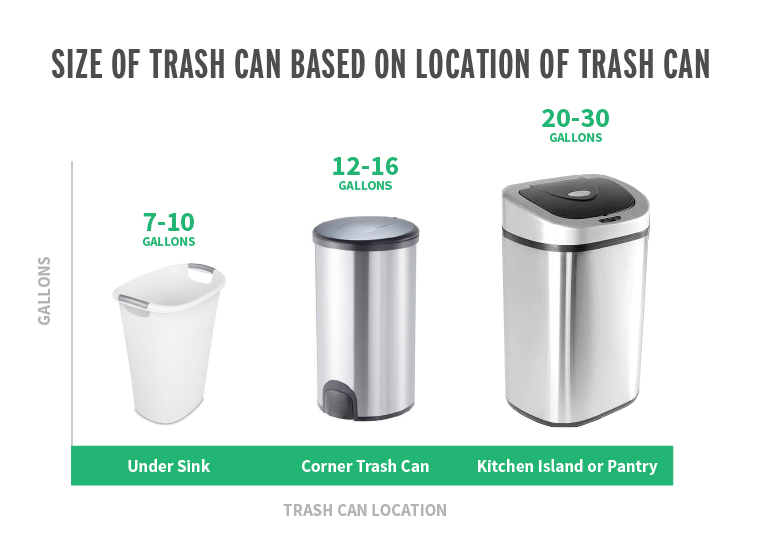
Image Source: trashcansunlimited.com
How Many Gallons Kitchen Trash Can Guide
The ideal kitchen trash can capacity depends on your household size and how much waste you generate; typically, a standard kitchen trash can size ranges from 10 to 13 gallons, which is suitable for most families.
Choosing the right kitchen trash can size can feel like a bigger decision than it needs to be. We all need a place to put our rubbish, but what’s the sweet spot for your kitchen bin size? Do you need a hulking bin that eats waste for breakfast, or a sleeker model that barely makes a dent? This guide will help you figure out the perfect trash can capacity for your home. We’ll dive into how much trash in kitchen waste bins, what garbage can volume is best, and explore the different kitchen bin measurements available.
Deciphering Your Kitchen Waste Needs
Before we get into gallons and liters, let’s think about what goes into your kitchen waste bin. It’s not just about wrappers and food scraps. Consider these common kitchen waste items:
- Food Scraps: This is often the largest category. Think vegetable peels, leftover meals, coffee grounds, and eggshells.
- Packaging: Plastic containers, cardboard boxes, foil wrappers, and glass jars all contribute to your kitchen waste.
- Paper Products: Paper towels, napkins, and disposable wipes end up here too.
- Non-Recyclables: Certain plastics, soiled paper products, and other items that can’t be recycled will go into your general waste bin.
The amount of these items your household produces daily, weekly, and monthly will heavily influence the trash can capacity you need.
Gauging Your Household Size
Your family size is a primary factor in determining how much trash you generate.
- Single Person or Couple: You’ll likely produce less waste than a larger family. A smaller kitchen bin size, perhaps in the 5-8 gallon range, might suffice.
- Family of 3-4: This is where the standard kitchen trash can size of 10-13 gallons often hits the mark.
- Larger Families (5+ people) or Heavy Cooks: If you have a large family or enjoy cooking elaborate meals frequently, you might find yourself needing a large kitchen trash can, potentially 15-20 gallons or even more.
How Often Do You Take Out the Trash?
Another crucial consideration is how often you empty your bin.
- Daily Trash Takers-Outs: If you’re someone who likes to start fresh every day and take the trash out daily, a smaller capacity bin might work.
- Weekly Trash Takers-Outs: Most households aim for weekly trash disposal. This is where a 10-13 gallon bin is often ideal, as it’s designed to hold a week’s worth of waste for an average family.
- Less Frequent Takers-Outs: If you only take out the trash every few days or less, you’ll need a larger garbage can volume to accommodate the accumulated waste without overflowing.
The Science of Gallons: Trash Can Capacity Explained
So, what does a “gallon” really mean when it comes to a trash can? A gallon is a unit of volume. For trash cans, this measurement tells you how much space the bin offers.
- 1 Gallon: This is a very small capacity, usually found in bathroom bins or small office wastebaskets.
- 5 Gallons: This is a step up, often suitable for small kitchens, studios, or as a secondary bin.
- 8 Gallons: A good intermediate size, suitable for smaller households or kitchens where waste isn’t a major issue.
- 10-13 Gallons: This is the most common standard kitchen trash can size. These bins are designed to hold a standard kitchen trash bag, making emptying them convenient.
- 15-20 Gallons and Up: These are large kitchen trash can options, ideal for bigger families or those who produce a significant amount of waste.
Kitchen Bin Measurements: What to Look For
When you’re looking at trash cans, you’ll see the gallon capacity listed. However, actual kitchen bin measurements (height, width, depth) are also important for fitting the bin into your designated space and ensuring your trash bags fit properly.
- Height: This is crucial for fitting under countertops or in tight corners.
- Width and Depth: These determine how much floor space the bin will occupy.
Always measure your intended space before purchasing to avoid disappointment. A bin that’s too tall won’t fit under your cabinets, and one that’s too wide might block a walkway.
Matching Your Needs to Kitchen Bin Size
Let’s break down common scenarios and suggest appropriate kitchen bin sizes.
The Solo Dweller or Studio Apartment
For individuals living alone or in a studio apartment, the waste generation is typically lower.
- Typical Gallon Range: 5-8 gallons.
- Why it works: You’re likely not producing vast amounts of food scraps, and packaging waste can often be managed through recycling. A smaller bin means less space occupied and less to carry when you do take it out. You might even find a sleek, small kitchen trash can that complements your decor.
The Young Couple or Small Family (2-3 People)
This demographic often sits comfortably within the standard range.
- Typical Gallon Range: 10-13 gallons.
- Why it works: This trash can capacity is designed to hold a week’s worth of mixed waste for a few people. It’s large enough to minimize frequent trips to the curb but not so large that it becomes an eyesore or takes up excessive space. This is your go-to for the standard kitchen trash can size.
The Growing Family or Avid Cook (4+ People)
When children are involved, or if your kitchen is the heart of culinary adventures, waste production can multiply.
- Typical Gallon Range: 13-20 gallons (or even a bit more).
- Why it works: With more mouths to feed and potentially more cooking, you’ll accumulate food waste and packaging faster. A large kitchen trash can ensures you don’t have to empty it multiple times a week. Consider if you have space for a larger unit; sometimes, a slightly larger capacity can mean the difference between emptying the bin every 3-4 days versus once a week.
Factors Affecting How Much Trash is in a Kitchen Bin
It’s not just about the number of people. Several habits and lifestyle choices can influence how much trash your kitchen bin holds.
- Cooking Habits: Do you cook from scratch often? This can lead to more vegetable peels and organic waste. Do you use a lot of pre-packaged ingredients? That adds to the packaging volume.
- Recycling and Composting Efforts: If you diligently recycle and compost, your general kitchen waste bin will fill up much slower. This might allow you to opt for a slightly smaller bin than you initially thought.
- Beverage Consumption: Single-use beverage containers (plastic bottles, aluminum cans) can quickly fill up a bin if they aren’t recycled.
- Occasional Large Waste Items: Do you buy large items that come in bulky packaging? This can temporarily fill up your bin faster.
- Entertaining: Hosting parties or gatherings means a sudden surge in trash from disposable plates, cups, and food waste.
The Role of Bag Size in Capacity
It’s important to note that trash can capacities are designed to work with standard trash bags. A 13-gallon trash can is made to fit a 13-gallon bag. While you can sometimes stuff more into a bag, it’s not ideal for sealing and carrying. Always check the recommended bag size for your chosen bin to ensure a good fit.
Exploring Different Types of Kitchen Trash Cans
Beyond just capacity, the type of trash can also impacts its usability and how much trash it can effectively hold.
Step Cans
- How they work: Operated by a foot pedal, these are hands-free.
- Capacity considerations: Available in various sizes, from small to large. The mechanism doesn’t usually reduce internal volume significantly.
- Pros: Hygienic, easy to open.
- Cons: Pedal mechanism can sometimes break.
Sensor Cans (Motion-Activated)
- How they work: The lid opens automatically when it detects your hand.
- Capacity considerations: Similar to step cans, they come in a range of gallon sizes.
- Pros: Highly hygienic, modern look.
- Cons: Require batteries or power, can sometimes open accidentally, might be sensitive to pets.
Swing-Top Cans
- How they work: A lid that swings open when pushed.
- Capacity considerations: Generally available in mid-range capacities.
- Pros: Simple to use, keeps odors contained when closed.
- Cons: Requires hand operation, lid can sometimes obstruct placing larger items.
Open-Top Cans
- How they work: No lid, completely open.
- Capacity considerations: Often come in larger sizes.
- Pros: Easy to toss items in quickly.
- Cons: Odors can escape, less aesthetically pleasing for some.
Side-Handle Cans
- How they work: Designed for easy lifting and carrying with handles on the sides.
- Capacity considerations: Found across all gallon ranges.
- Pros: Makes taking out the trash easier.
- Cons: Lid might be separate or a simple flip-top.
Making the Right Choice: A Practical Approach
Let’s synthesize the information to help you pick the perfect kitchen bin size.
Step 1: Assess Your Household Size and Waste Habits.
- Small Household (1-2 people) / Low Waste Generation: Aim for 5-8 gallons.
- Average Household (3-4 people) / Moderate Waste Generation: Target 10-13 gallons. This is your standard kitchen trash can size.
- Large Household (5+ people) / High Waste Generation / Frequent Cooks: Consider 13-20+ gallons for a large kitchen trash can.
Step 2: Consider Your Space.
- Measure the area where the bin will go.
- Check the height, width, and depth of potential bins.
- Ensure there’s enough clearance for lids to open (especially for step or sensor cans).
Step 3: Think About Your Bagging Frequency.
- If you take out the trash daily, a smaller bin is fine.
- If you aim for weekly disposal, choose a capacity that can accommodate that.
Step 4: Factor in Other Waste Management.
- Are you a super recycler? Do you compost? This reduces the load on your main kitchen waste bin.
Frequently Asked Questions About Kitchen Trash Cans
Q1: What is the most common kitchen trash can size?
A1: The most common kitchen trash can size is between 10 and 13 gallons. This capacity is ideal for most households and conveniently fits standard kitchen trash bags.
Q2: How do I calculate how much trash my kitchen produces?
A2: Observe your waste for a week. Note how often your current bin fills up and how much you throw away daily. Consider your household size and cooking habits to estimate your typical kitchen waste generation.
Q3: Can I use a smaller trash can if I recycle a lot?
A3: Yes, if you are diligent with recycling and composting, you can often get away with a smaller kitchen bin size than a household that doesn’t recycle much. A 5-8 gallon bin might be sufficient.
Q4: What are the actual kitchen bin measurements for a 13-gallon trash can?
A4: Kitchen bin measurements vary by brand and design, but a typical 13-gallon trash can might be around 26-28 inches tall and 15-17 inches wide. Always check the product specifications for precise dimensions.
Q5: How does garbage can volume relate to bag size?
A5: Garbage can volume is typically designed to match standard trash bag sizes. A 13-gallon trash can is made to fit a 13-gallon trash bag, ensuring a snug fit and easy removal.
Q6: Is a 20-gallon trash can too big for a kitchen?
A6: A 20-gallon trash can is considered a large kitchen trash can. It’s not too big if you have a large family, cook extensively, or don’t take out the trash very often. However, for smaller households or those who prefer a more compact bin, it might be unnecessarily large.
Q7: What is a typical kitchen bin capacity for a family of four?
A7: A typical kitchen bin capacity for a family of four is usually between 10 and 13 gallons. This is the standard kitchen trash can size and should accommodate their weekly waste.
Q8: Can I fit a large kitchen trash can in a small kitchen?
A8: You can fit a large kitchen trash can in a small kitchen if you have adequate floor space or can utilize a corner effectively. However, consider the bin’s footprint (width and depth) in relation to the available space to avoid it becoming a hindrance.
By carefully considering these factors, you can confidently select a kitchen trash can that meets your household’s needs, making waste management a simpler, more efficient task.