
Can you remove a Moen kitchen faucet yourself? Yes, you can remove a Moen kitchen faucet yourself with basic tools and a little patience. This guide will walk you through the entire process, from gathering your supplies to the final steps of Moen faucet removal. Whether you’re replacing your Moen kitchen faucet or simply need to make repairs, knowing how to properly uninstall Moen sink faucet is a valuable skill. We’ll cover everything you need to know to disconnect Moen faucet cleanly and efficiently.
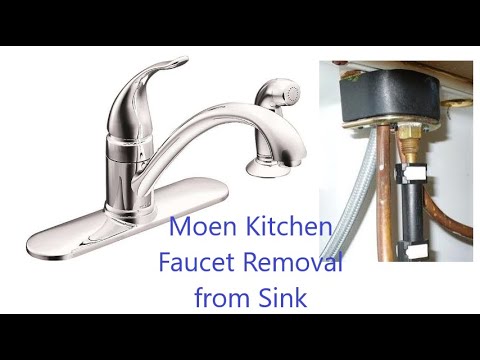
Image Source: i.ytimg.com
Preparing for Moen Faucet Removal
Before you begin to disassemble Moen faucet components, proper preparation is key to a smooth and successful operation. This includes gathering the necessary tools and understanding the basic layout of your existing faucet.
Essential Tools for the Job
Having the right tools makes Moen faucet removal much easier. Here’s a list of what you’ll likely need:
- Adjustable Wrench: This is your primary tool for loosening and tightening nuts and bolts.
- Basin Wrench: A specialized wrench designed to reach nuts in tight spaces, often found behind the sink basin.
- Pliers: Regular and needle-nose pliers can be helpful for gripping and maneuvering small parts.
- Screwdriver Set: You’ll need both Phillips and flathead screwdrivers for various screws.
- Bucket or Towels: To catch any residual water and protect your cabinets.
- Safety Glasses: To protect your eyes from debris or dripping water.
- Flashlight or Headlamp: To see clearly in the often dark under-sink area.
- Penetrating Oil (Optional but Recommended): For stubborn or corroded nuts.
Shutting Off the Water Supply
This is the most critical step in Moen faucet plumbing disconnection. Failure to do this can result in water damage.
- Locate the Shut-Off Valves: Under your sink, you should find two shut-off valves connected to the water supply lines running to your faucet. One is for hot water, and the other is for cold water.
- Turn Off the Valves: Turn the handles of both valves clockwise until they are firmly closed.
- Test the Faucet: Turn on the faucet to ensure the water supply has been completely shut off. Let any remaining water drain out.
Step-by-Step Guide to Moen Faucet Removal
Now that you’re prepared, let’s get started on the actual process of removing Moen faucet components.
Step 1: Removing the Moen Faucet Handle
The first step in disassembling Moen faucet is usually removing the handle. The method for this can vary slightly depending on your specific Moen faucet model.
- Locate the Decorative Cap: Most Moen faucet handles have a decorative cap that hides a screw. This cap might be a small button or a metal cover.
- Remove the Cap: Gently pry off the cap using a small flathead screwdriver or a utility knife. Be careful not to scratch the faucet finish.
- Unscrew the Handle Screw: Once the cap is removed, you’ll see a screw. Use the appropriate screwdriver to remove this screw.
- Lift Off the Handle: With the screw removed, the handle should now lift straight up and off the faucet stem. If it’s stuck, a gentle rocking motion might help. For very stubborn handles, you might need a specialized handle puller, but this is rarely necessary for standard Moen faucet removal.
Step 2: Disconnecting the Supply Lines
This is where you will disconnect Moen faucet supply lines from the shut-off valves.
- Position Your Bucket: Place a bucket or towels under the shut-off valves to catch any residual water.
- Loosen the Supply Line Nuts: Use your adjustable wrench to loosen the nuts connecting the flexible supply lines to the shut-off valves. Turn counter-clockwise.
- Remove the Supply Lines: Once loose, carefully pull the supply lines away from the valves. You might need to gently twist them.
Step 3: Detaching the Moen Faucet Sprayer (If Applicable)
If your faucet has a side sprayer, you’ll need to detach Moen faucet sprayer before you can lift the main faucet body.
- Locate the Sprayer Hose Connection: Under the sink, you’ll find where the sprayer hose connects to the faucet body. It’s usually a threaded connection.
- Disconnect the Sprayer Hose: Use your adjustable wrench or pliers to loosen and disconnect the sprayer hose. Again, be ready for a small amount of water to drain out.
- Remove the Sprayer Unit: The sprayer itself will typically pull out from the hole in the sink or countertop.
Step 4: Addressing the Moen Faucet Base Removal
This is often the trickiest part of Moen faucet removal, as the mounting hardware can be difficult to access.
- Identify the Mounting Hardware: Look directly under the sink, directly beneath where the faucet is mounted. You’ll see a mounting bracket or nuts holding the faucet in place. Moen faucets often use a mounting system that incorporates a metal plate and one or more nuts, or a single large nut.
- Loosen the Mounting Nuts: This is where your basin wrench or adjustable wrench will be invaluable. Use it to loosen the nuts or securing hardware holding the faucet to the sink. Turn counter-clockwise.
- Remove the Mounting Hardware: Once the nuts are loose, remove them completely. If there’s a mounting bracket or plate, slide it off as well. This is part of the Moen faucet base removal.
Step 5: Completing the Moen Faucet Supply Line Removal
You’ve already disconnected the supply lines from the valves, but now you need to disconnect them from the faucet itself.
- Access the Faucet Connections: The supply lines will connect directly to the underside of the faucet body.
- Loosen Faucet Connections: Use your adjustable wrench to loosen the nuts where the supply lines attach to the faucet.
- Remove Supply Lines: Once loose, the supply lines will detach from the faucet. This completes the Moen faucet supply line removal from the faucet assembly.
Step 6: Lifting the Faucet from the Sink
With all connections and mounting hardware removed, the faucet should now be free.
- Gently Lift: Carefully lift the entire faucet assembly up and out from the top of the sink or countertop.
- Inspect the Mounting Area: Once the faucet is removed, examine the sink or countertop where it was mounted. Clean off any old plumber’s putty or sealant residue.
Step 7: Cleaning Up
Good job! You’ve successfully completed the uninstall Moen sink faucet process.
- Wipe Down: Wipe down any spilled water.
- Dry Everything: Ensure the under-sink area is dry to prevent mold or mildew.
- Dispose of Old Faucet: Properly dispose of your old faucet.
Common Challenges and Solutions During Moen Faucet Removal
Even with clear instructions, you might encounter a few hurdles during Moen faucet removal. Here are some common issues and how to tackle them.
Stubborn Nuts and Corroded Fittings
- Penetrating Oil: If nuts are seized due to corrosion, spray them generously with a penetrating oil like WD-40. Let it sit for at least 15-30 minutes (or longer for severe corrosion) before attempting to loosen them again.
- Heat (Use with Extreme Caution): In very rare, stubborn cases, applying a little heat with a hairdryer or heat gun to the nut (not the faucet or surrounding materials) can help expand the metal and break the corrosion seal. Be extremely cautious with heat, especially near plastic components or flammable materials.
- Proper Wrench Grip: Ensure your wrench is fully seated on the nut to avoid stripping the threads or the nut itself.
Tight Spaces Under the Sink
- Basin Wrench: As mentioned earlier, a basin wrench is specifically designed for these tight spots. Its pivoting head allows you to get a grip on nuts in awkward positions.
- Flexible Tools: Some specialized flexible socket extensions can also help reach difficult nuts.
- Patience: Working in tight spaces requires patience. Take your time, and don’t force anything.
Damaged or Worn Parts
- Careful Disassembly: If you notice a part is damaged, try to disassemble Moen faucet parts gently to avoid further breakage.
- Replacement Parts: If you’re repairing, have replacement parts ready. If you’re replacing the entire faucet, this is less of a concern.
Replacing Your Moen Kitchen Faucet: A Seamless Transition
Once you’ve successfully removed your old faucet, you’re ready to install a new one. The process of replacing Moen kitchen faucet is similar in reverse.
Preparing the Sink Surface
- Clean Thoroughly: Ensure the sink or countertop surface where the faucet will be mounted is clean, dry, and free of any old sealant or debris.
- New Gasket or Sealant: Most new faucets come with a rubber gasket or require plumber’s putty or silicone sealant to create a watertight seal.
Installing the New Faucet
- Follow Manufacturer Instructions: Always refer to the specific installation instructions that come with your new Moen faucet.
- Mounting: Feed the new faucet’s supply lines and mounting posts through the sink holes. Secure it from underneath with the provided mounting hardware.
- Connecting Supply Lines: Connect the new supply lines to the appropriate hot and cold shut-off valves.
- Connecting Sprayer (If Applicable): Attach the new sprayer hose according to the instructions.
- Turn on Water and Test: Slowly turn the shut-off valves back on and check thoroughly for leaks at all connections. Turn on the faucet to test its operation.
Frequently Asked Questions About Moen Faucet Removal
Here are answers to some common questions regarding the removal of Moen kitchen faucets.
Q1: How do I know if I need to replace my Moen faucet?
A1: You might need to replace your faucet if it’s leaking persistently, has very low water pressure that can’t be fixed by cleaning the aerator, the handle is difficult to operate, or it’s outdated and you want to update your kitchen’s look.
Q2: Can I disconnect Moen faucet without shutting off the water?
A2: No, absolutely not. You must shut off the water supply at the shut-off valves under the sink before attempting to disconnect any part of the faucet or its supply lines. Failure to do so will result in significant water damage.
Q3: My Moen faucet handle is stuck. How do I remove Moen faucet handle?
A3: First, ensure you’ve removed the decorative cap and the screw underneath. If the handle is still stuck, it might be corroded onto the stem. You can try gently rocking it back and forth. If it’s still stubborn, a specialized faucet handle puller tool might be necessary, but use it carefully to avoid damaging the faucet body or handle.
Q4: What if the mounting nuts are impossible to loosen? How do I complete the Moen faucet base removal?
A4: If the nuts are severely corroded, apply penetrating oil and let it soak. Ensure you are using the correct size wrench and have a firm grip. If the nuts are round and have no flats for a wrench, they might be a wingnut style that you can turn by hand, or a larger retaining nut that requires a basin wrench. In extreme cases where the nuts are completely seized and can’t be turned without risking damage to the sink, a small metal-cutting tool or a nut splitter might be considered as a last resort, but these require great care.
Q5: How do I detach Moen faucet sprayer if it’s integrated into the spout?
A5: Most modern Moen kitchen faucets with integrated sprayers have a quick-connect fitting for the sprayer hose. Look for a plastic clip or a threaded collar where the hose meets the faucet body. You usually push a tab or unscrew a collar to release it. Check your faucet’s specific model for the exact method.
Q6: What is the purpose of plumber’s putty and when do I use it during Moen faucet plumbing disconnection and reinstallation?
A6: Plumber’s putty is a soft, pliable sealant used to create a watertight seal between plumbing fixtures (like faucets) and non-porous surfaces (like sinks and countertops). When you’re replacing Moen kitchen faucet, you’ll typically apply a rope of plumber’s putty around the base of the new faucet before mounting it to prevent water from seeping into the cabinet below. You don’t use it during removal, but it’s crucial for installation. Some materials, like certain granite or porous countertops, might react with plumber’s putty, so check your countertop manufacturer’s recommendations; silicone sealant might be preferred in those cases.
Q7: What is the difference between disconnecting the supply lines at the valve and at the faucet when I uninstall Moen sink faucet?
A7: You need to disconnect the supply lines at both locations. First, you disconnect them from the shut-off valves under the sink to isolate the faucet from the water mains. Then, you disconnect the other end of the supply lines from the faucet itself. Both steps are necessary to fully remove the faucet.
Q8: I’m looking to replace Moen kitchen faucet, but I’m unsure about the specific type of mounting hardware my current faucet uses. What are common types?
A8: Moen uses various mounting systems. Some older models might use large metal locknuts. Newer models often use a mounting bracket that screws into place, sometimes with a large plastic nut or clip system. The best way to identify it is to look under your sink. Your goal is to loosen whatever is securing the faucet’s threaded shank or mounting posts to the sink or countertop.
Q9: Is it difficult to remove Moen faucet handle if it’s a lever style versus a knob style?
A9: Generally, the process for removing a lever handle is very similar to removing a knob handle. Both typically have a decorative cap that hides a screw. The main difference is the shape of the handle itself and how it attaches to the stem. Always look for that cap and the screw beneath it first.
Q10: What are the steps for Moen faucet supply line removal if they are old and rigid?
A10: If your supply lines are old and stiff, you might need to be a bit more careful. Apply penetrating oil to the connections at both the valve and the faucet. Use your adjustable wrench to loosen them, turning counter-clockwise. If they still resist, you might need to apply steady pressure. If they are so brittle that they are about to break, be prepared to replace them with new flexible supply lines during your replacing Moen kitchen faucet project.
By following these steps, you can confidently tackle the task of Moen faucet removal. Remember to prioritize safety by shutting off the water and working patiently.