
Can you fix a leaky Delta kitchen faucet yourself? Yes, you absolutely can! Many common Delta faucet problems can be resolved with simple DIY fixes, saving you time and money on professional plumbers. This guide will walk you through Delta faucet repair step-by-step, covering everything from drips to handle issues and even basic Delta faucet installation considerations.
A dripping faucet is not just annoying; it wastes water and can significantly increase your utility bills. Fortunately, most Delta faucet dripping issues stem from worn-out internal components that are relatively easy to replace. We’ll delve into identifying the cause and finding the right Delta faucet parts to get your faucet working like new.
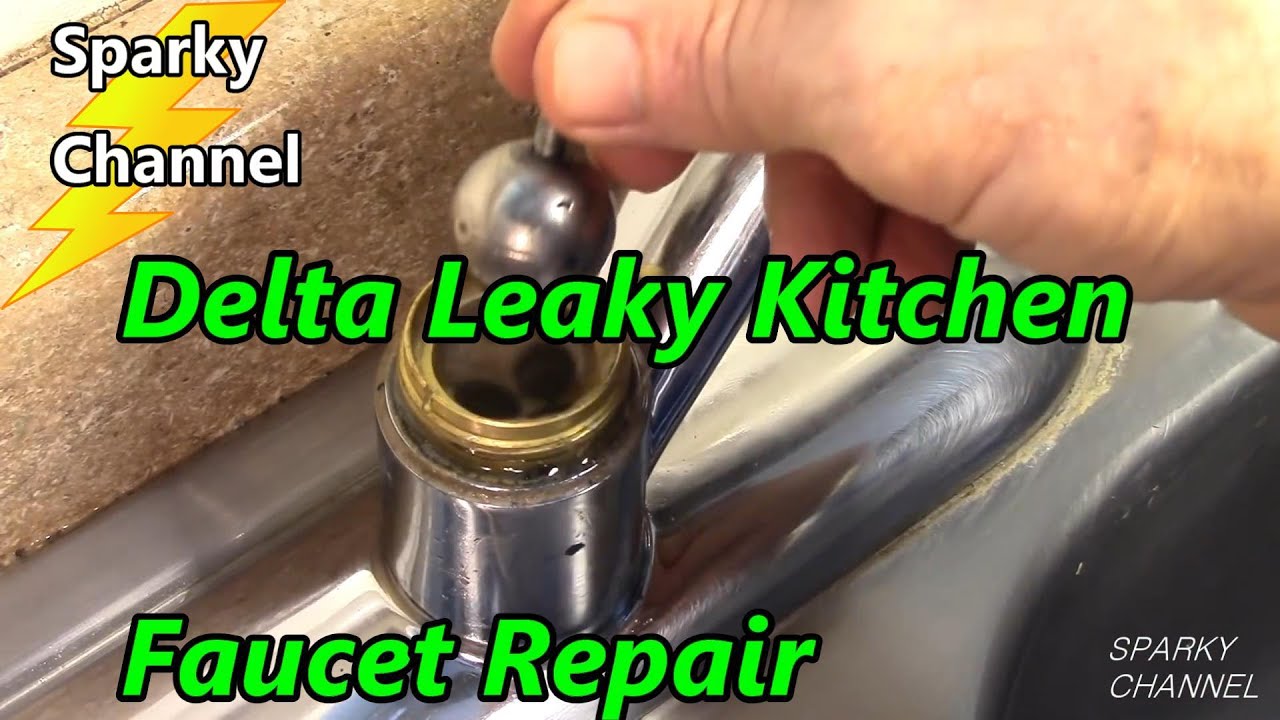
Image Source: i.ytimg.com
Dealing with a Leaky Delta Faucet: The Cartridge is Often the Culprit
A leaky Delta faucet is one of the most frequent complaints. When water drips from the spout even when the handle is turned off, it’s usually a sign that the internal cartridge is worn out. The cartridge is the heart of your faucet, controlling the flow and temperature of the water. Over time, the rubber seals or plastic components within the cartridge can degrade, leading to leaks.
Step 1: Gathering Your Tools and Identifying Your Faucet Model
Before you begin any Delta faucet repair, it’s crucial to have the right tools and know your faucet model. This ensures you purchase the correct Delta faucet parts.
-
Essential Tools:
- Adjustable wrench
- Phillips head screwdriver
- Flathead screwdriver
- Allen wrench set (often included with new cartridges)
- Pliers
- Rag or old towel
- Bucket
- Plumber’s tape (optional, for threaded connections)
- Penetrating oil (if parts are stubborn)
-
Identifying Your Delta Faucet:
- Check the faucet itself: Look for a brand name or model number printed on the faucet body, usually on the back or underside of the spout, or on the base.
- Original packaging or manual: If you still have them, these will clearly state the model.
- Online resources: Delta Faucet has an extensive website with a “Support” section. You can often identify your faucet by its appearance using their visual search tool or by entering any numbers you find. Knowing the specific model is key to ordering the correct Delta faucet parts.
Step 2: Shutting Off the Water Supply
This is a critical step for any faucet repair.
- Locate the shut-off valves: These are typically found under the sink, connected to the hot and cold water lines leading to your faucet.
- Turn the valves clockwise: Turn them until they are firmly shut.
- Test the faucet: Turn on the faucet handles to drain any residual water in the lines and confirm that the water supply is indeed off.
Step 3: Disassembling the Faucet Handle
This is where Delta faucet handle repair comes into play. The method for removing the handle varies slightly by model, but here’s a general approach:
- Locate the decorative cap: Many Delta handles have a small cap that hides a screw. This cap might be red/blue for hot/cold indication or a small metal disc.
- Gently pry off the cap: Use a small flathead screwdriver or a utility knife to carefully pry off the cap. Be gentle to avoid scratching the faucet finish.
- Remove the handle screw: Once the cap is off, you’ll see a screw. Use the appropriate screwdriver (usually Phillips) to remove it.
- Pull off the handle: The handle should now lift straight up and off the faucet body. If it’s stuck, a gentle wiggle or a specialized handle puller (available at hardware stores) might be needed. Avoid forcing it, as you could damage the faucet or the handle.
Step 4: Accessing and Replacing the Cartridge
This is the core of replacing Delta faucet cartridge.
- Remove the escutcheon cap: After removing the handle, you might see a decorative metal cap covering the cartridge. This is often held in place by a threaded collar or screws. Use your adjustable wrench or screwdriver to remove it.
- Identify the cartridge retaining clip or nut: Most Delta faucets use either a retaining clip or a threaded nut to hold the cartridge in place.
- Retaining Clip: This is usually a small, U-shaped metal clip. You’ll need needle-nose pliers or a flathead screwdriver to pull it straight out. Note its orientation for reinstallation.
- Retaining Nut: Some models have a large brass nut that screws the cartridge in. Use your adjustable wrench to loosen and remove this nut by turning it counter-clockwise.
- Pull out the old cartridge: Once the clip or nut is removed, the cartridge should be accessible. You might be able to pull it straight up. If it’s stiff, use pliers to grip the stem of the cartridge and gently twist and pull. Sometimes, a specialized cartridge puller tool is necessary for very stubborn cartridges, especially if mineral buildup has caused it to seize.
- Insert the new cartridge: Take your new, correct Delta faucet parts (the replacement cartridge) and align it with the opening in the faucet body. There are usually slots or notches on the cartridge that need to match corresponding guides in the faucet. Ensure it’s seated firmly and in the correct orientation.
- Reinstall the retaining clip or nut:
- For clips, slide it back into its original position.
- For nuts, screw it back on and tighten it with your wrench. Don’t overtighten; snug is usually sufficient.
Step 5: Reassembling the Faucet
Now, reverse the disassembly process:
- Replace the escutcheon cap: Screw it back on or secure it with its retaining mechanism.
- Reattach the handle: Slide the handle back onto the stem and secure it with the screw.
- Replace the decorative cap: Pop the cap back into place.
Step 6: Testing Your Work
- Turn the water supply back on: Slowly open the shut-off valves under the sink.
- Check for leaks: Turn the faucet on and off, checking for drips from the spout and around the handle. If there are no leaks, congratulations, you’ve successfully completed your Delta faucet repair!
Delta Faucet Handle Repair: When the Leak is Around the Handle
Sometimes, the leak isn’t from the spout but rather from around the base of the handle. This can indicate worn O-rings or seals within the handle assembly or beneath the cartridge.
- Accessing the handle assembly: Follow the steps above to remove the handle. Once the handle is off, you may see a bonnet nut or packing nut.
- Bonnet nut: This is a decorative nut that often screws onto the faucet body and helps secure the cartridge. You might need to unscrew this with a wrench to get better access.
- Packing nut: This nut compresses packing material or O-rings around the valve stem. If it’s loose, tightening it slightly can stop a leak around the stem. Be careful not to overtighten.
- Replacing O-rings: If tightening the packing nut doesn’t work, the O-rings might be worn. Carefully remove the packing nut, and you should be able to see and remove the old O-rings with a small pick or screwdriver. Lubricate the new O-rings with plumber’s grease before installing them to ensure a good seal and easier operation.
Delta Faucet Aerator Cleaning: Addressing Low Water Flow
If your faucet’s water flow is weak or sputtering, the issue might be with the aerator. The aerator is a small screen at the very end of the spout that mixes air with the water stream for a smoother flow. Over time, mineral deposits and sediment can clog it. This is a simple Delta faucet troubleshooting step.
Step 1: Unscrewing the Aerator
- Identify the aerator: It’s the component at the tip of your spout.
- Unscrew it: Most aerators can be unscrewed by hand by turning them counter-clockwise. If it’s stuck, you might need to wrap the end of the spout with a cloth to protect it and then use pliers or an adjustable wrench to loosen it.
Step 2: Cleaning the Aerator
- Disassemble (if possible): Some aerators can be unscrewed into their component parts (screen, washer).
- Rinse and brush: Rinse the aerator under running water. Use an old toothbrush or a small brush to gently scrub away any visible debris or mineral buildup.
- Soaking: For tougher buildup, soak the aerator in a solution of equal parts white vinegar and water for a few hours or overnight. The vinegar will help dissolve mineral deposits.
- Flush thoroughly: After soaking, rinse the aerator thoroughly to remove any remaining vinegar and loosened debris.
Step 3: Reassembling and Testing
- Reassemble: If you took the aerator apart, put it back together, ensuring the washer is properly seated.
- Screw it back on: Screw the aerator back onto the spout, hand-tightening first, then giving it a slight turn with a wrench if needed (again, protecting the finish with a cloth).
- Test: Turn on the water to check the flow.
Common Delta Faucet Problems and Troubleshooting
Let’s consolidate some common issues and their solutions for effective Delta faucet troubleshooting.
| Problem | Likely Cause(s) | Solution(s) |
|---|---|---|
| Delta faucet dripping from spout | Worn cartridge, worn O-rings, loose valve seat | Replace cartridge. Inspect and replace O-rings in the handle assembly. Check and clean/replace valve seats if applicable (less common in modern Delta faucets). |
| Leak around the handle | Worn O-rings, loose packing nut/bonnet nut | Tighten packing nut/bonnet nut. Replace O-rings in the handle assembly. |
| Low water pressure | Clogged aerator, debris in supply lines | Clean Delta faucet aerator cleaning. Flush supply lines. Check shut-off valves are fully open. |
| Handle is stiff or hard to turn | Mineral buildup, worn cartridge seals, dry O-rings | Remove and clean cartridge, replacing O-rings. Lubricate moving parts with plumber’s grease. Replace cartridge if significantly worn. |
| Water temperature issues | Problems with cartridge, faulty mixing valve (if applicable) | Replace Delta faucet cartridge. Ensure hot and cold water supply lines are connected correctly. |
| Faucet making noise (e.g., banging) | Loose components, high water pressure, worn washer | Tighten mounting nuts. Check for loose parts under the sink. Consider a pressure-reducing valve if pressure is too high. Replace worn washers or cartridge components. |
Delta Faucet Installation: Ensuring a Smooth Setup
While this guide focuses on repairs, a proper Delta faucet installation can prevent many future problems.
- Read the manual: Always refer to the specific installation manual for your Delta faucet model.
- Shut off water: Crucial for any installation.
- Clean mounting surfaces: Ensure the sink or countertop is clean and dry where the faucet will sit.
- Use appropriate sealants: Apply plumber’s putty or silicone sealant around the base to prevent water from seeping underneath.
- Connect supply lines correctly: Ensure hot goes to hot and cold to cold. Hand-tighten first, then use a wrench for a snug fit, but don’t overtighten.
- Flush the lines: Before attaching the aerator, run water through the faucet for a minute or two to flush out any debris from the installation process.
What About Specific Delta Faucet Parts?
When you need Delta faucet parts, knowing what to look for is key.
- Cartridges: These are the most common replacement parts. Delta uses various types of cartridges (e.g., single-handle ball, ceramic disc). Always match the part number to your faucet model.
- O-rings and Seals: Small rubber rings that provide watertight seals. They are often sold in kits specific to faucet models or cartridge types.
- Handles and Decorative Caps: If a handle is damaged or you want to change the look, these are available.
- Aerators: Easy to find and replace if yours is beyond cleaning.
- Mounting Hardware: Nuts, screws, and clips that hold the faucet in place or secure the cartridge.
You can typically purchase Delta faucet parts directly from Delta Faucet’s website, major home improvement stores (like Home Depot, Lowe’s), or specialized plumbing supply stores. Bring the old part or your faucet model number for accurate identification.
When to Call a Professional
While many Delta faucet repairs are DIY-friendly, there are times when it’s best to call a plumber:
- You can’t identify your faucet model: If you’re completely lost, a professional can help.
- Parts are severely corroded or stuck: Forcing parts can cause more damage.
- You’ve tried repairs, and the problem persists: This might indicate a more complex issue.
- You’re not comfortable with the process: Plumbing can be intimidating, and it’s okay to admit when you need expert help.
- The faucet body itself is cracked or damaged: This usually requires full replacement.
Frequently Asked Questions (FAQ)
Q: How often should I clean my Delta faucet aerator?
A: It depends on your water quality. If you notice reduced water flow or sputtering, it’s time for a cleaning. For many households, cleaning every 6-12 months is sufficient.
Q: Can I use WD-40 to loosen stuck faucet parts?
A: While penetrating oil like WD-40 can help, be cautious. Ensure it doesn’t get into the internal workings of the faucet, as it can degrade rubber seals. It’s best used on external threads that are seized.
Q: My Delta faucet handle is loose, but the screw is tight. What’s wrong?
A: This often means the splines on the handle or the valve stem are worn, or the bonnet nut holding the cartridge is loose. Check the bonnet nut first, then consider if the handle or stem needs replacement.
Q: Do I need to replace the entire faucet if the cartridge is bad?
A: Not usually! Replacing the cartridge is a very common and effective Delta faucet repair that often resolves most dripping issues.
Q: Where can I find diagrams for my specific Delta faucet model?
A: Delta Faucet’s official website is the best resource. Navigate to their “Support” section, and you can usually find parts diagrams, installation manuals, and troubleshooting guides by searching for your faucet’s model number.
By following these steps, you can confidently tackle many Delta faucet problems, keep your kitchen sink running smoothly, and avoid unnecessary repair costs. Happy fixing!